Introduction
Building a whiskey bar in your man cave is one of those projects that sounds more complicated than it actually is. With the right space, a few essential tools, and a coherent design theme, you can create a private retreat that rivals any craft cocktail bar — on your own terms and your own timeline.
The interest in whiskey culture has turned into serious spending. The Kentucky Bourbon Trail hosted 2.7 million visitors in 2025, and American whiskey sales reached $5.1 billion the same year. Those numbers reflect a hobby that people are investing real money in — including their own dedicated spaces at home.
This guide walks through the full setup — space selection, bar essentials, decor, bottle storage, and hosting your first tasting night. Whether you're working with a basement corner or a dedicated private space, there's an approach here that fits.
TL;DR
- Plan for at least 100–150 sq. ft.; 200+ sq. ft. opens the door to seating and a true lounge setup
- Standard bar counters sit at 42 inches high with a 6-foot minimum length for three stools
- Store bottles upright, away from sunlight, at 59–68°F for optimal preservation
- Commit to one design theme — rustic distillery, speakeasy, or bourbon lodge — for a cohesive look
- Stock both Glencairn glasses for tasting and rocks glasses for sipping
Choosing the Right Space for Your Man Cave Whiskey Bar
Basement, Garage, or Spare Room?
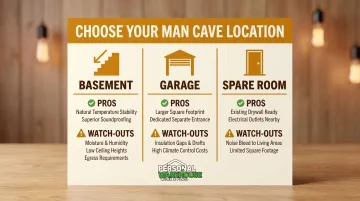
Each location has real trade-offs:
| Space | Pros | Watch Out For |
|---|---|---|
| Basement | Natural temperature stability, soundproofing | Moisture, low ceiling height, egress |
| Garage | Larger footprint, separate entrance, easier buildout | Insulation gaps, climate control costs |
| Spare room | Existing drywall, electrical, plumbing nearby | Noise bleed, limited square footage |
According to KegWorks' home bar planning guide, a standard bar counter runs 42 inches high by 24 inches deep, with a minimum 6-foot length to seat three stools at 2-foot spacing. Your usable floor area should be at least 100–150 sq. ft. for a basic setup with the bar structure and a couple of seats.
Why a Dedicated Standalone Space Changes Everything
Shared rooms mean constant compromises — noise bleed into living spaces, limited square footage, and no room to expand a growing collection. A dedicated space, whether a converted garage or a private warehouse unit, gives you full design control and room to build the setup you actually want.
Personal Warehouse units include 100/150-amp 3-phase electrical service, all-LED lighting, high-efficiency insulation, heating, and optional A/C — making them a practical starting point compared to building out raw concrete from scratch. A mezzanine add-on can expand usable space by up to 30%, which works well for splitting a lower bar area from an upper lounge or extra storage.
Layout and Utilities to Plan Early
Before you start buying bar stools, map out three zones: spirits storage, prep counter, and seating. These should form a natural triangle with at least 36 inches of clearance behind the bar stool line.
Get the following sorted before the walls close:
- Zone layout: Confirm traffic flow between all three areas
- GFCI outlets: Required on all bar receptacles under the 2023 NEC
- Dedicated refrigerator circuit: Prevents nuisance trips from shared circuits
- Utility sink: Optional, but rinsing glasses between pours keeps a tasting night running cleanly
Bar Setup Essentials Every Whiskey Bar Needs
The Bar Surface Sets the Tone
Your counter material does more visual work than any piece of wall art:
- Reclaimed wood top — warm, textured, pairs perfectly with a rustic distillery theme
- Dark granite or butcher block — classic pub energy, forgiving of spills
- Floating shelf bar — minimal footprint, works in tight spaces or modern loft aesthetics
Whatever you choose, it becomes the anchor for every other design decision in the room.
Glassware and Tools
The Glencairn glass is the only vessel endorsed by the Scotch Whisky Association and is used by every whisky distillery in Scotland and Ireland. For a whiskey bar, you need both Glencairn glasses for nosing and tasting, and rocks glasses for casual pours and cocktails.
Essential tools beyond glassware:
- Cocktail mixing glass and bar spoon
- Jigger (precision matters more than people think)
- Hawthorne strainer
- Large-format ice molds — spheres and cubes melt slower, dilute less aggressively
- Whiskey stones for a light chill without any dilution
Storage: Cabinet vs. Open Shelving
UV exposure degrades whiskey — it breaks down tannins, fades labels, and dulls flavor over time. The practical solution is to combine both storage types: display your hero bottles on open shelves where they create visual impact, and keep the broader collection behind cabinet doors with UV-filtering or tinted glass.
Once your storage is sorted, personalization is what makes the bar feel like yours — custom engraved decanters, monogrammed glassware, a personal aging barrel, or a branded ice stamp are all low-cost ways to make the setup distinctly personal.
Refrigeration
Whiskey doesn't need refrigeration — in fact, The Glenlivet explicitly advises against storing spirits in fridges or freezers, as cold temperatures dull flavor and can cause cloudiness. What you do want under the bar: a small fridge for mixers, garnishes, and water. A compact countertop chiller for serving bourbon just slightly below room temperature is a worthwhile luxury addition.
Whiskey Bar Themes and Decor Ideas
Committing to a design theme is the difference between a bar that looks intentional and one that looks assembled over time from random purchases. Pick one and build everything around it. The four styles below cover the most popular directions — from raw industrial to refined lodge — so you can find the one that fits your space.
Rustic Distillery
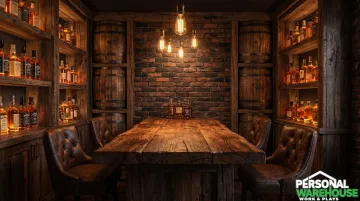
The most popular choice for basement and warehouse spaces with industrial bones:
- Reclaimed wood shelving and bar top
- Exposed brick or brick-look tile on the feature wall
- Barrel stave accents as wall paneling
- Edison bulb pendant lighting
- Vintage distillery maps or copper pot still photography
Classic Speakeasy
Dark, dramatic, and immediately atmospheric:
- Dark wood paneling and leather bar stools with backs
- Art Deco pendant fixtures
- Framed vintage cocktail posters or an ornate backbar mirror
- A chalkboard menu behind the bar
- Optional: a velvet curtain entrance or bookshelf hidden door
Bourbon Country Lodge
Best suited to a garage or standalone space with a rugged exterior:
- Warm earth tones throughout — burnt orange, deep brown, forest green
- Plaid or leather upholstery on seating
- Antler or wrought iron hardware on cabinets
- Stone or faux-stone accent wall
- Hunting or fishing memorabilia mixed with whiskey decor
Whatever theme you choose, flooring is one decision that affects every style equally — and it's worth getting right from the start.
Flooring Matters More Than Most People Realize
Flooring is one of the highest-impact design decisions in a bar space. Options worth considering:
- Wide-plank hardwood or LVP — warmth and character; LVP is particularly practical for basements given its moisture resistance
- Concrete-look tile — industrial, easy to clean, pairs with speakeasy or modern themes
- Exposed brick panels — peel-and-stick options make this achievable without a full renovation
- Dark subway tile — excellent as a bar backsplash in any theme
The global vinyl flooring market was valued at $25.37 billion in 2024 — LVP's rise in basement applications reflects how much the category has improved in quality and realism.
Stocking and Displaying Your Whiskey Collection
Whiskey vs. Bourbon: The Short Version
Bourbon is a type of whiskey — specifically, one produced in the U.S. from a mash of at least 51% corn, aged in new charred oak containers, and bottled at no less than 80 proof (per 27 CFR 5.22). All bourbon is whiskey; not all whiskey is bourbon. A well-stocked man cave bar typically carries both, plus a few complementary spirits to give guests real options.
Building a Starter Collection
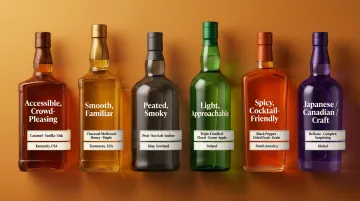
A well-rounded 6–8 bottle starting shelf covers different flavor profiles and gives guests real variety:
- A Kentucky straight bourbon (accessible, crowd-pleasing)
- A Tennessee whiskey for comparison
- An Islay Scotch (peated, smoky — a conversation starter)
- An Irish whiskey (lighter, approachable)
- A rye whiskey (spicier, excellent for cocktails)
- One wildcard — Japanese, Canadian, or a craft American expression
How to Store Bottles Properly
Storage fundamentals are consistent across serious whiskey collections:
- Always upright — high-alcohol spirits degrade cork when stored on their side
- 59–68°F stable temperature — avoid swings greater than 5°F, which can cause expansion and contraction that compromises the seal
- Away from direct sunlight — UV exposure lightens color and damages flavor
- Opened bottles with less than a third remaining should be decanted into smaller containers to minimize oxidation
The Tasting Flight Shelf
Set aside a dedicated section of your display for 3–5 currently open bottles organized by region or flavor profile. This gives the bar a lived-in, curator's feel — not a showroom.
Label each bottle with a simple hang tag or use wine glass markers directly on the glass. That small detail signals to guests that this is a working bar — one that gets used, not just admired.
Setting the Atmosphere: Lighting, Seating, and Finishing Touches
Layered Lighting
A single overhead fixture turns any room into a utility space. Layer three zones instead:
- Ambient — recessed or track lighting for general brightness
- Accent — LED strip lights under the bar counter and inside glass cabinets
- Task — a pendant or two directly over the bar surface
For bulb color, stay in the 2700K–3000K range. This warm tone replicates the amber glow associated with whiskey and creates the intimate atmosphere you're after. Dimmable fixtures on all three zones give you full control over the mood.
Seating
Comfort keeps people in the space longer — which is the whole point. Match your seating to the theme and the crowd:
- Leather-upholstered bar stools with backs — ergonomic for long sessions, suit most themes
- A lounge chair or loveseat in a corner — for slower, more contemplative sipping
- Pub-style table-and-stool setup — works when you're hosting four or more regularly
Finishing Touches That Complete the Room
- Framed distillery prints or vintage bourbon ads arranged as a gallery wall
- A wall clock made from a barrel lid
- A chalkboard for writing the night's lineup and tasting notes
- A Bluetooth speaker tucked out of sight — background jazz or blues, not competing with conversation
Get these layers right, and the room does the work — pulling people in and keeping them there.
Hosting Whiskey Tastings and Cocktail Nights
Running a Proper Tasting Flight
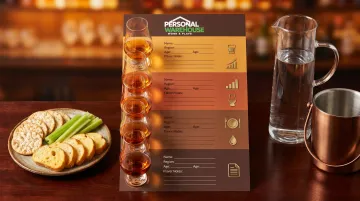
Structure matters. According to Whisky Advocate's tasting essentials guide, the format that works:
- Pour no more than ½ oz per expression
- Work lightest to boldest — cask strength pours go last
- Use Glencairn glasses, labeled with wine glass markers
- Offer plain crackers, celery, or plain baguette as palate cleansers — nothing spicy or strongly flavored
- Keep filtered water and a dump bucket on the bar
- Print simple tasting cards: name, region, age statement, and two or three flavor notes
Themed Cocktail Nights
Once you've nailed the tasting format, themed cocktail nights take the bar from personal collection to real gathering spot:
- Old Fashioned-off — everyone makes their own version using the IBA standard (1.5 oz bourbon or rye, 1 sugar cube, Angostura bitters, water) and guests vote on their favorite
- Blind bourbon bracket — four bourbons, blind pours, bracket-style elimination
- Bourbon and food pairing — dark chocolate, aged cheddar, smoked brisket, and pickled items work particularly well with high-corn mash profiles
Frequently Asked Questions
What is the minimum space needed for a man cave whiskey bar?
A basic bar setup — counter, two stools, and a small spirits shelf — fits in around 80–100 sq. ft. For seating, display, and room to move comfortably, 150–200 sq. ft. is the practical target. A dedicated room or private warehouse space lets you add a lounge area and a proper collection display without feeling cramped.
Do I need plumbing for a home whiskey bar?
Not strictly. Whiskey requires no refrigeration or running water. That said, a small utility sink dramatically improves the experience — rinsing glasses between pours during a tasting, mixing cocktails, and general cleanup all benefit. Many people add one during a garage or basement buildout when they're already running electrical and framing the space.
How should I store whiskey bottles at home?
Always upright — the cork doesn't need to stay wet the way wine corks do, and high-proof alcohol will erode a cork stored sideways. Keep bottles away from direct sunlight and temperature swings, ideally between 59–68°F. For collectible or rare bottles, a UV-filtering cabinet or tinted display case preserves both the spirit and the label.
What's the difference between a whiskey bar and a bourbon bar?
Bourbon is a legally defined subset of whiskey: U.S.-produced, at least 51% corn mash, aged in new charred oak, and bottled at minimum 80 proof. A bourbon bar focuses exclusively on American expressions; a whiskey bar covers the full category — Scotch, Irish, Japanese, Canadian, and rye included.
What lighting is best for a whiskey bar ambiance?
Warm-toned bulbs in the 2700K–3000K range on dimmable fixtures. Layer ambient, accent, and task lighting across three zones — Edison pendants and LED strips under the bar counter deliver the most impact for that low-lit, intimate feel.
Can a garage or private warehouse space work as a man cave whiskey bar?
Yes — and for many people, it's the better option. A dedicated space offers a larger footprint, a separate entrance, and full design freedom. The core requirements are insulation for climate control, proper electrical for lighting and appliances, and a sealed floor. Personal Warehouse units come with all three built in as standard.