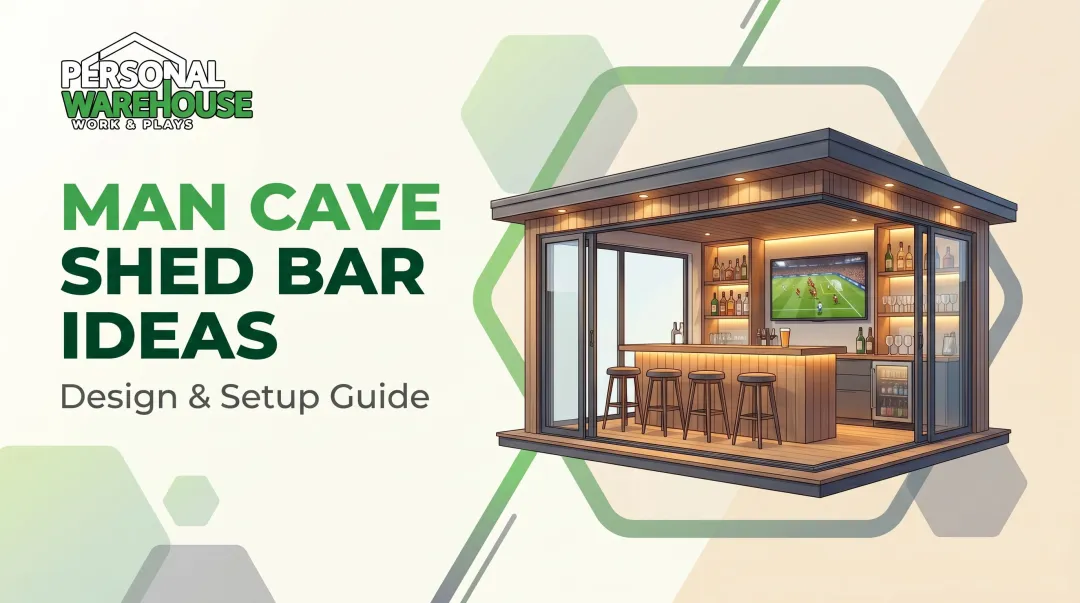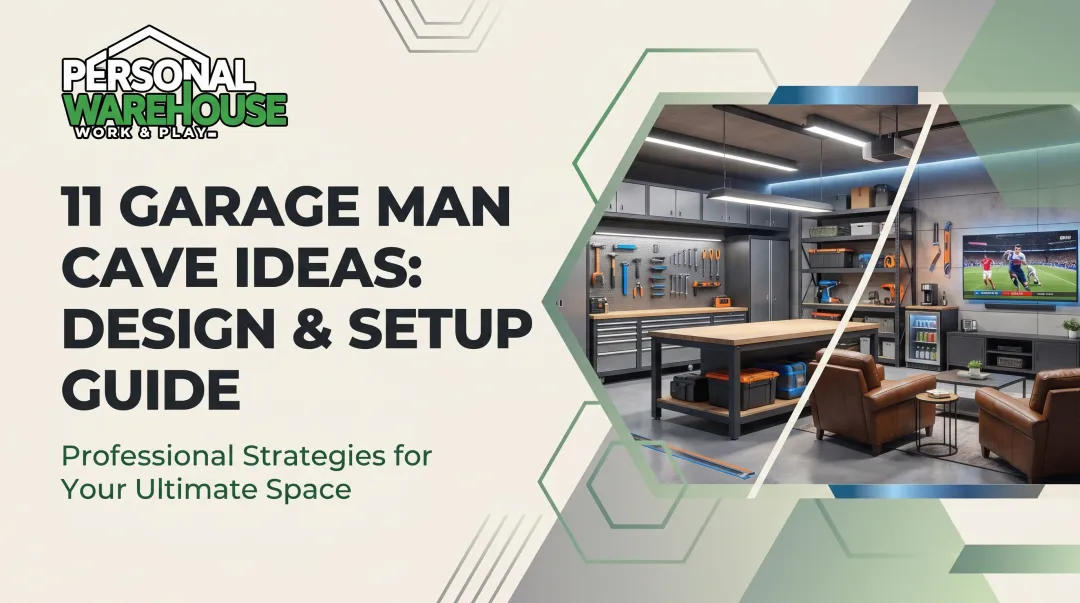

The Household Space War Is Real (and Totally Worth Having)
Shared homes are wonderful until someone's guitar amp is competing with a yoga session, or the craft supplies have officially colonized the dining table. When two people share a space full-time, personal retreats stop being a luxury — they become the difference between a peaceful household and a slow-burning negotiation over every square foot.
What started as the "man cave" has evolved into something much broader. Today, dedicated personal retreats — whether called a lady lair, she shed, hobby haven, or something else entirely — are legitimate factors in home buying decisions, renovation budgets, and real estate valuations.
Here's what this guide covers:
- How to design each type of retreat well — for him, for her, and for both
- Where to put it (basement, garage, backyard, or beyond the property line)
- What it realistically costs to build or finish
- Whether it adds measurable value when you sell
TLDR
- Demand for dedicated personal spaces is rising — 30% of prospective buyers now want a separate structure for personal use
- Man caves work best when designed around a specific purpose (sports bar, workshop, gaming lounge)
- Lady lairs succeed when the design reflects the owner's actual hobbies — not just a generic aesthetic
- Basement conversions average $32,000 nationally; backyard sheds start under $4,000
- A well-finished personal space can add 5–15% to home value
- Heavy theming boosts enjoyment now but can shrink your buyer pool later
His Space, Her Space: Why Dedicated Rooms Are a Modern Real Estate Trend
The man cave went mainstream years ago. What's newer is the lady lair — also called the she shed, ladies' lounge, or ma'am cave — catching up as a recognized feature in home listings and renovation conversations.
Both concepts reflect something real: people need space that's entirely theirs. Historically, "the rest of the house" was assumed to be shared (or implicitly feminine) space, while the man cave was the sole gender-coded retreat.
The lady lair represents women claiming that same right — a dedicated space built around their hobbies, personality, and need for occasional solitude.
This isn't a niche trend. Recent data confirms the shift:
- Zillow's Consumer Housing Trends Report 2025 found desire for a separate structure for personal or office use jumped from 26% in 2024 to 30% in 2025 among prospective buyers
- The NAR/NARI 2025 Remodeling Impact Report reported Americans spent $603 billion on home remodeling in 2024, with 46% of buyers less willing to compromise on a home's condition
Finished flex spaces have moved from bonus feature to baseline expectation for today's buyers.
Building the Ultimate Man Cave: Design, Features, and Finishing Touches
Choosing Your Purpose Before Picking Your Décor
Before you pick a single bar stool or TV mount, answer one question: what is this room actually for? A sports-watching den has completely different demands than a garage workshop or a music studio. Purpose drives every decision that follows — from acoustic treatment to flooring to how many outlets you need.
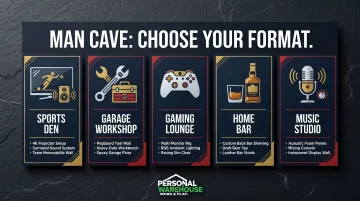
The most common man cave formats:
- Sports and entertainment den — oversized TV, surround sound, bar setup, abundant seating
- Garage workshop — workbenches, tool storage, epoxy flooring, heavy electrical capacity
- Gaming lounge — ergonomic seating, monitor setups, ambient lighting control
- Home bar — LED-lit cabinetry, mini-fridge or kegerator, lounge seating
- Music or recording space — soundproofing, acoustic panels, instrument storage
Must-Have Man Cave Elements
Once purpose is established, the functional core comes together around a few anchors:
- Seating — enough for guests without cramping the primary activity zone
- AV setup — quality display and sound system sized to the room (not just the biggest TV available)
- Lighting — adjustable, dimmable, ideally layered so the room can shift from sports-watching mode to relaxed lounge mode
- Bar or refreshment station — even a mini-fridge and a dedicated counter covers the basics
- Activity anchor — billiards table, poker setup, dart board, workbench, or recording gear depending on the primary use
Acoustics and insulation are where most first-time builders underestimate the project. Soundproofing runs $10–$30 per square foot for basic treatment — or roughly $1,000–$2,700 for an average room — and is far cheaper to install during a build than to add later. Temperature control matters too; an un-insulated garage or basement swings from unusable cold to oppressive heat without it.
Flooring and storage choices follow the same purpose-first logic:
- Epoxy or sealed concrete — durable and easy to clean in workshop or garage environments
- Engineered hardwood or LVP — better suited to entertainment-focused spaces
- Wall-mounted storage — keeps gear accessible without eating into floor space
Once the practical decisions are locked in, the finishing touches are what make the space yours. Personalization has to be genuine — a room built around a team, a band, or a hobby you actually care about feels like a retreat. One assembled from a man cave mood board feels like a hotel room.
Designing the Perfect Lady Lair: From She Shed to Sanctuary
Define What You Want Your Space to Do For You
The lady lair tends to be more introspective than the typical man cave. Where the man cave often skews social — built for watching games with friends or hosting poker nights — the lady lair is frequently about solitude, creativity, or focused personal time.
Common use cases:
- Art or craft studio
- Reading room or personal library
- Yoga and meditation space
- Beauty or dressing suite
- Home office separated from household noise
- Garden potting shed with a comfortable lounge corner
The design should follow the use, not precede it. An art studio needs north-facing light and easy-clean surfaces. A meditation room needs acoustic separation and minimal clutter. A craft studio needs serious storage and a large work surface. Trying to serve all of these equally usually means serving none of them well.
Elements That Make a Lady Lair Feel Like a True Retreat
Atmosphere sets the foundation. Large windows, layered lighting (task, ambient, and accent), live plants, and textiles that feel warm and personal transform a room from functional to restorative. This space can handle bold color, rich patterns, and textures that might feel overwhelming in a shared living area — that's part of the point.
Functional essentials:
- Seating worth staying in — the centerpiece of comfort, chosen for how long you'll actually use the space
- Dedicated work surface — sized to your primary activity, whether that's a craft table, desk, vanity, or open mat
- Refreshment station — even a small coffee setup changes how long you actually use the space
- Intentional storage — clutter in a personal retreat works against the psychological reset you're trying to create
One principle worth holding onto: design for the actual person, not a stylized version of femininity. If your hobbies are welding and woodworking, your lady lair should reflect that. If it's watercolor and reading, let the space show it.
The goal is to walk in and immediately feel that this room belongs entirely to you. Familiar textures, sentimental objects, a curated scent, and personal effects all deepen that sense of ownership.
Where Does Your Personal Space Actually Live?
Location is often determined by what's already available — and each option comes with genuine trade-offs.
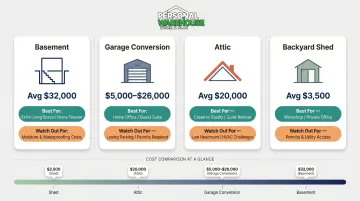
| Location | Cost Range | Best For | Watch Out For |
|---|---|---|---|
| Basement | $15,000–$75,000 (avg $32,000) | Large entertainment spaces, workshops | Moisture; egress requirements |
| Garage conversion | $5,000–$26,000 | Hobby shops, studios, gyms | Losing parking; HVAC costs |
| Attic | $7,500–$35,000 (avg $20,000) | Reading rooms, quiet retreats | Structural reinforcement; headroom |
| Backyard shed | $1,000–$15,000 (avg $3,500) | She sheds, craft rooms, yoga studios | Climate control; utility connections |
A few practical notes before converting anything:
- Electrical upgrades, HVAC extensions, and plumbing additions all carry their own costs — budget for them separately
- Building permits are required for nearly every type of interior-to-livable-space conversion; don't skip this step
- HOA rules may restrict outbuildings, exterior modifications, or certain structural changes
- Backyard sheds are often permit-exempt under 200 square feet, but that threshold varies by municipality
For couples where both partners want dedicated spaces, the trade-offs multiply quickly. Two rooms carved out inside the home often means sacrificing a guest bedroom, a storage area, or the garage entirely — and one partner's space almost always ends up feeling like the afterthought. That's where off-site options, like a dedicated personal warehouse unit, start to make practical sense: one space outside the home, purpose-built for whoever needs it most.