
Introduction
Many small business owners, collectors, and RV enthusiasts share the same frustration: they need a dedicated, secure space for their work or prized possessions, but traditional leasing leaves them with nothing to show for years of payments. Rents escalate, landlords sell, and leases don't renew.
Warehouse condominiums solve this directly. Instead of paying rent indefinitely, you buy the unit outright — receiving a deed, building equity, and gaining the freedom to customize your space without asking permission.
Small-format industrial properties under 100,000 sq ft carry a vacancy rate of just 3.9%, compared to 10.7% for large facilities — meaning demand for this type of space far outpaces supply. That gap makes understanding your ownership options more valuable than ever.
This guide covers how warehouse condos are defined, how ownership and legal structure work, what they cost, why ownership beats renting long-term, and who this asset class is best suited for.
TL;DR
- A warehouse condo is an individually deeded industrial or storage unit within a shared complex — you own it, not rent it
- Owners receive a recorded deed, can mortgage or sell the unit, and share common areas through a condo association
- Units typically include concrete floors, LED lighting, 100–150-amp electrical, and insulated overhead doors
- SBA 504 and 7(a) loans are common financing routes, with as little as 10% down and 25-year fixed terms
- Ideal for small business owners, collectors, RV/boat owners, and real estate investors building long-term equity
What Is a Warehouse Condominium?
A warehouse condominium is an individually owned unit within a larger warehouse or industrial complex. The buyer receives a recorded deed to their specific unit and a proportional, undivided interest in shared common areas — parking, driveways, the building exterior — governed through a condo association. The legal structure mirrors residential or office condos closely.
Terminology Worth Clarifying
Three terms appear interchangeably in the market, but they're not identical:
- Storage condos — primarily designed for vehicle and personal property storage (boats, RVs, classic cars)
- Warehouse condos / industrial condos — suited for light commercial, distribution, or manufacturing operations
- Flex condos — hybrid units that blend storage, workspace, and light commercial use
All three share core characteristics: high ceilings, electrical service, wide overhead doors, and individual ownership.
What You Actually Own
With a warehouse condo purchase, you receive:
- Exclusive interior use of your deeded unit
- The right to sell, lease, or mortgage the unit independently
- A proportional stake in shared common elements
- The ability to customize your interior without landlord approval (subject to HOA rules)
What Warehouse Condos Are Not
Two important distinctions buyers often miss:
- Not a residence. In most jurisdictions, warehouse condos cannot legally serve as a primary home — they're zoned for business, storage, and hobby use.
- Not a rental unit. Standard self-storage means paying rent indefinitely with zero equity. A warehouse condo purchase builds ownership from day one.
Those specs translate directly into what you get on move-in day. Typical units range from roughly 800 to 5,000+ square feet, with ceiling clearances from 14 feet for storage-focused units up to 18–24 feet for light industrial configurations.
Most units are delivered as a shell — concrete floors, electrical service, overhead door — that owners customize to fit their needs. Personal Warehouse units, for example, come standard with finished concrete floors, all-LED lighting, and 100/150-amp 3-phase electrical service.
How Warehouse Condos Work: Ownership, HOA, and Legal Structure
The Ownership Model
Each unit carries a separate legal title. The owner can mortgage, sell, lease, or pass the unit down independently — with no connection to what neighboring unit owners do. Unlike a commercial lease, nothing about your ownership depends on a landlord's decisions.
Owners pay individual real estate taxes based on their unit's assessed value plus their percentage share of common areas. The master insurance policy covers shared areas only; each owner maintains their own business content and liability coverage.
The Condo Association
A condo association (or HOA) governs the shared elements of the complex:
- Exterior maintenance and repairs
- Landscaping and parking areas
- Shared security systems
- Common area utilities and reserves
Owners pay monthly association dues calculated as a percentage of their unit's value relative to the total complex. The association also maintains capital reserves for major replacements — roofs, parking surfaces, mechanical systems — and may levy special assessments when unexpected capital costs arise. Always review the condo declaration documents with legal counsel before purchasing.
The 99-Year Ground Lease Model
Beyond HOA governance, the ownership structure itself can vary. Some warehouse condo developments — including Personal Warehouse projects — use a ground lease structure rather than fee-simple land ownership:
- The developer retains ownership of the underlying land
- The buyer owns the physical structure — the unit itself — under a long-term leasehold
- The 99-year term provides generational stability and allows owners to build equity, sell, and lease their unit
This separation of land and building ownership reduces the upfront purchase price, since buyers aren't paying for the land itself — only the structure. The trade-off: at lease expiration, improvements typically revert to the landowner unless renewal terms have been negotiated. Buyers should verify lease renewal provisions before committing.
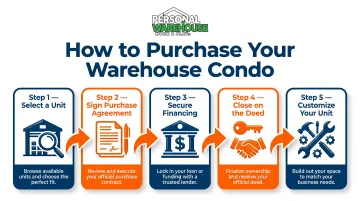
The Purchase Process
- Select a unit — sometimes pre-construction, with reservations accepted before completion
- Sign a purchase agreement and review the condo declaration
- Secure financing through SBA 504, conventional commercial loans, or developer-preferred lenders
- Close on the deed and begin participating in the condo association
- Customize your unit within the bounds of HOA bylaws
Types of Warehouse Condos
Warehouse condos fall into three broad categories, each designed for a different buyer and use case.
| Type | Best For | Typical Features |
|---|---|---|
| Personal / Lifestyle | Collectors, hobbyists, RV and boat owners | Climate control, extra amenities, finished interiors |
| Commercial / Business | Small businesses, contractors, light manufacturers | Office buildout, dock access, higher clear heights |
| Vehicle & Recreational | RVs, boats, classic cars | Tall overhead doors, drive-through access, utility hookups |
Personal Warehouse covers all three categories, with configurations including Personal Warehouses, Professional Work Suites, and RV/Boat Storage. Projects are active across Montana, Colorado, the Carolinas, and several other markets.
Benefits of Owning vs. Renting Warehouse Space
Equity and Cost Stability
Lease payments vanish the moment they're made — ownership payments build something. With national average industrial asking rents at $10.13 per square foot and growing 4.5% year-over-year, a tenant in 2,000 sq ft faces roughly $20,260 in annual rent — with compounding escalation every year. An owner's fixed-rate mortgage stays level, and CDC Small Business Finance notes that many SBA 504 borrowers end up paying less per month than they did in rent.
Passive Income Potential
Warehouse condo ownership isn't just about using the space — it's an asset you can put to work:
- Lease your unit to a business or individual tenant when not using it full-time
- Small-format industrial vacancy sits at just 3.9% nationally, meaning qualified tenants are not hard to find
- Rents for sub-100,000 sq ft spaces grew 5%–8% year-over-year in Q3 2025 while big-box rents stagnated
Personal Warehouse units are designed with rental income in mind — owners who don't need full-time access can lease to a tenant and generate returns while the asset appreciates.
Customization Without Permission
Owners can modify their interior freely (within HOA rules) — no landlord sign-off required:
- Add mezzanines, HVAC, or specialized lighting
- Build out private restrooms, kitchenettes, or office space
- Install racking, entertainment systems, or studio equipment
Personal Warehouse mezzanines, for example, expand usable square footage by up to 30% — a verified specification across their Flex Warehouse, Micro Flex Warehouse, and Personal Warehouse product lines.
Appreciation in a Supply-Constrained Market
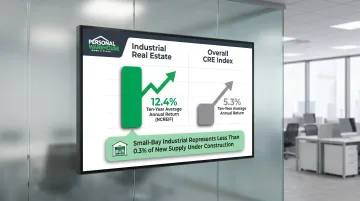
Industrial real estate delivered a 12.4% ten-year average annual return according to the NCREIF Property Index — more than double the overall commercial real estate index of 5.3%. Small-bay industrial supply nationally represents less than 0.3% of total industrial stock under construction, a structural shortage that supports long-term value for existing owners.
Costs and Financing a Warehouse Condo
Purchase Price Ranges
Prices vary significantly by location, size, and finish level:
- Storage/vehicle-focused units: roughly $55,000–$200,000 for smaller configurations
- Larger or premium industrial units: $200,000–$300,000+, with high-cost metro markets commanding considerably more per square foot
- HOA dues, property taxes, and utilities are ongoing costs on top of the purchase price — factor these into your monthly budget
Personal Warehouse does not publish list prices publicly; pricing is available on request and varies by project and unit configuration.
Financing Options
Warehouse condos are more accessible to finance than full industrial buildings:
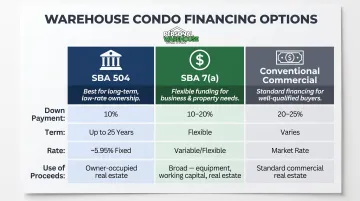
| Loan Type | Down Payment | Term | Notes |
|---|---|---|---|
| SBA 504 | 10% | Up to 25 years | Fixed rate; currently ~5.95% |
| SBA 7(a) | 10%–20% | Varies | Flexible use of proceeds |
| Conventional commercial | 20%–25% | Varies | Standard for non-SBA qualified buyers |
Personal Warehouse works with preferred lenders experienced in SBA 504 and 7(a) financing for owner-occupied warehouse condos. Loan terms are structured comparably to a residential mortgage, which makes ownership realistic for buyers who can't put down a large commercial down payment.
Ongoing Monthly Costs to Budget
Beyond your monthly mortgage payment, budget for:
- HOA/condo association dues — varies by project; covers exterior maintenance, shared elements, and reserve contributions
- Property taxes — assessed individually on your unit
- Utilities — individually metered at Personal Warehouse locations, so you pay only for what you use
- Unit insurance — business content and liability coverage; the master policy covers common areas only
Who Should Buy a Warehouse Condo?
Small Business Owners
Any business currently paying rent on warehouse, flex, or industrial space is a strong candidate. Ownership converts those monthly payments into equity instead of a landlord's pocket. Key advantages over continued leasing:
- Eliminates landlord dependency and lease renewal risk
- Locks in cost certainty for budgeting and long-term planning
- Builds equity — businesses leasing three or more years are often spending more than ownership would cost
Collectors, Hobbyists, and Lifestyle Buyers
RV owners, boat owners, classic car collectors, and woodworkers who've outgrown their garage find warehouse condos deliver something no storage facility can: a private, customizable space they actually own. Climate control, custom restrooms, and built-in workspace upgrades make these units functional year-round, not just a place to park.
Commercial Real Estate Investors
Warehouse condos offer an entry point into industrial real estate without the capital requirements of a full building. Key investor advantages:
- Lower price point than standalone industrial properties
- Passive rental income from a structurally undersupplied asset class
- Appreciation potential backed by strong historical industrial returns
Those advantages sharpen considerably in supply-constrained markets. Personal Warehouse's Bozeman, MT project is currently under construction and accepting reservations for 2026 delivery. Bozeman's industrial vacancy rate sits at just 2.4% — among the tightest in the country — making ownership there a time-sensitive opportunity. Service areas also include Colorado, the Carolinas, Georgia, Florida, Texas, and several other states.
Frequently Asked Questions
What is a warehouse condominium?
A warehouse condo is an individually owned industrial or storage unit within a larger complex. The buyer receives a deed to their specific unit and shares common areas with other owners through a condo association — unlike renting a traditional storage or warehouse space, where you build no equity.
What are the two types of warehouse condos?
The two primary types are personal/lifestyle condos (for hobbyists, collectors, and vehicle storage) and commercial/business condos (for operating businesses needing warehouse and office space). Ownership structure adds a secondary layer: freehold units include the land, while leasehold arrangements grant building ownership over a long-term ground lease.
Are warehouse condos legal to live in?
No. Warehouse condos are not residential units and cannot legally serve as a primary residence in most jurisdictions. They are zoned for business operations, storage, and hobby use, not permanent habitation.
Can I finance a warehouse condo like a home?
Warehouse condos are commercial real estate, but many qualify for SBA 504 loans with as little as 10% down and 25-year fixed terms — financing terms that closely resemble a residential mortgage. Some developers also offer access to preferred lenders who specialize in these transactions, which can simplify the approval process.