
Introduction
For many small business owners and individuals, leasing industrial space feels like an endless expense — rent checks go out every month, rates climb every year, and nothing is being built in return. Meanwhile, buying an entire standalone warehouse or industrial building is out of reach for most.
Industrial condominiums sit squarely between those two options. They offer deed-based ownership of a functional industrial space without requiring you to purchase an entire building. For the right buyer, that means building equity, locking in costs, and gaining the kind of control that a lease never provides.
This article covers what industrial condos are, how ownership and legal structure work, who they suit best, and what to evaluate before you buy.
TL;DR
- An industrial condo is an individually owned unit within a larger industrial building. You hold a deed to your space and share common areas with other owners
- Units typically range from 1,000 to 10,000 sq ft, making ownership attainable for small businesses and individuals
- SBA 504 loans allow qualified buyers to purchase with as little as 10% down
- Ownership locks in your long-term costs while industrial rents keep climbing — up 2.1% year-over-year nationally and still rising
- Viable uses are broad: contractor storage, light manufacturing, RV/boat storage, car collections, and creative studios
What Is an Industrial Condominium?
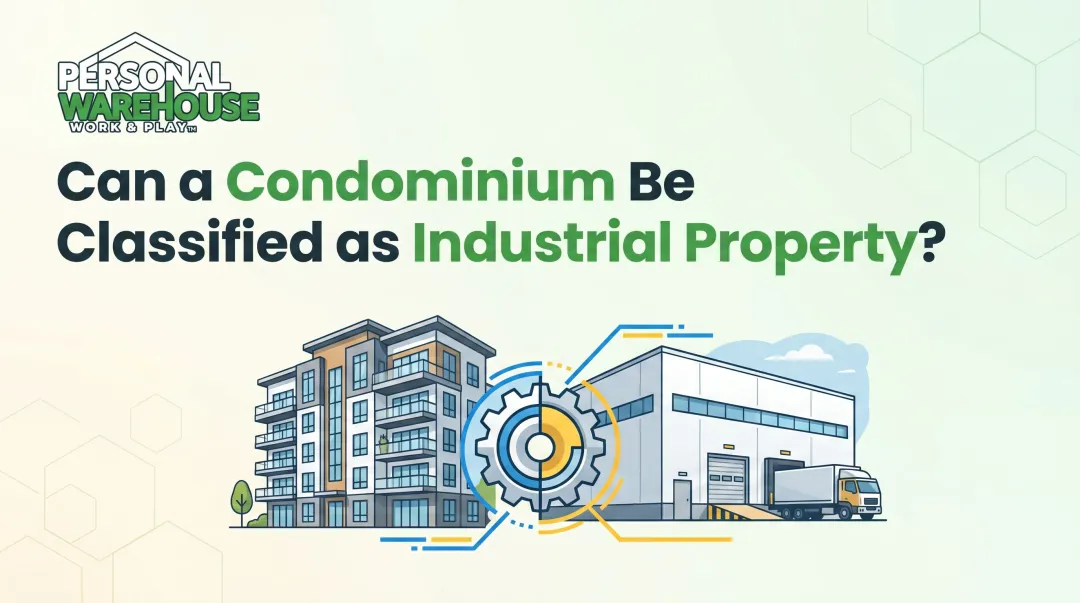
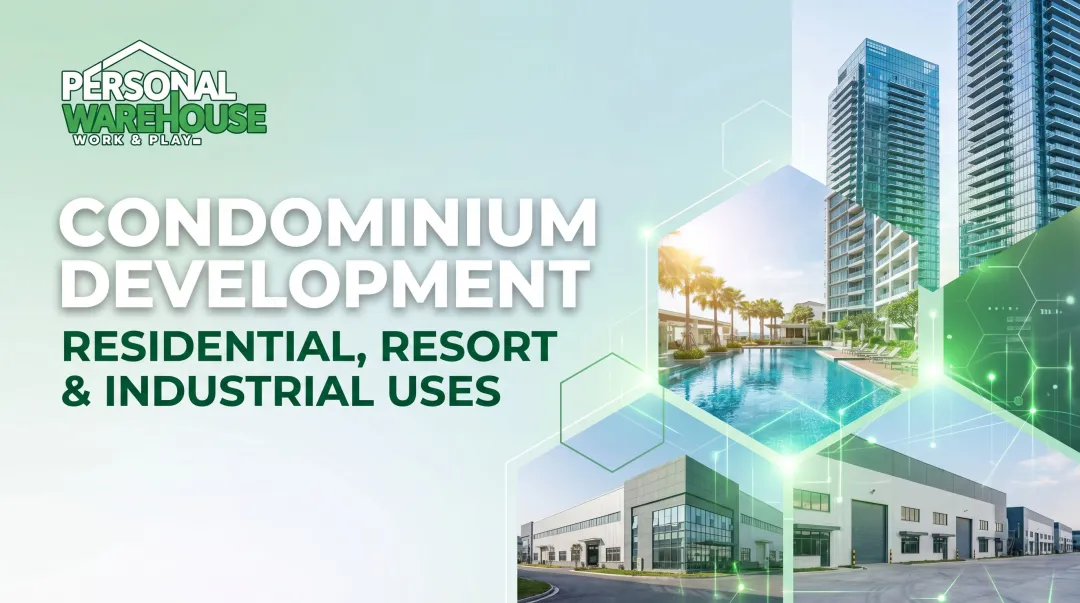
An industrial condominium is a unit within a larger industrial property that is individually owned but shares common areas and facilities with other units. Each owner holds a deed to their specific unit and a proportional stake in shared elements: parking lots, driveways, roofing, and exterior infrastructure.
The structure mirrors residential condos in one key way: individual title plus shared common area ownership. Beyond that, the two diverge. Industrial condos are zoned for commercial or industrial use — the space is built for work, storage, fabrication, or distribution, not occupancy.
Size and Accessibility
According to RISE Commercial District, small bay industrial units — the most common format for industrial condos — range from 1,000 to 10,000 sq ft, with the average around 5,000 sq ft. Total buildings are typically 50,000 to 100,000 sq ft, subdivided into individually owned units.
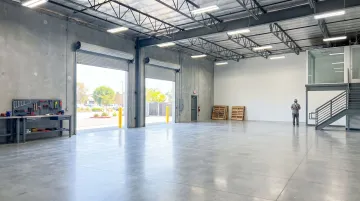
That size range matters because it's what makes industrial ownership accessible. Most buyers can't justify — or afford — an entire standalone building. A 2,500 sq ft unit within a 60,000 sq ft development puts commercial real estate within reach for sole proprietors, small businesses, and individual buyers.
Common Uses
Industrial condos serve a wide range of purposes:
- Light manufacturing and fabrication
- Contractor equipment and material storage
- Auto and collector car garages
- RV and boat storage
- E-commerce fulfillment and distribution
- Creative studios, photo studios, and woodworking shops
- Flex office/warehouse hybrids
Personal Warehouse units are built to support this full range of uses. Each unit comes standard with 100/150-amp 3-phase electrical service and heavily insulated overhead doors, giving owners the infrastructure to run a professional operation from day one.
How Industrial Condos Work
Ownership Structure and Legal Framework
Each buyer receives a unit deed granting ownership of their specific space and a percentage interest in the common areas. That percentage is typically based on the unit's value relative to the total project.
The condominium regime is established through a Master Deed (sometimes called a Declaration) and Bylaws, which define each unit's boundaries, outline owner rights and responsibilities, and create the legal framework for the association.
Under state condominium statutes, each unit functions as a separate legal parcel that can be sold, leased, financed, and taxed independently.
A condo association (or board) governs shared elements. It manages common area maintenance, sets rules for use, collects monthly fees from owners, and often contracts a property management firm for day-to-day operations. Those fees fund shared expenses: roofing, parking lot upkeep, landscaping, and reserve funds for future capital repairs.
Before those fees become your responsibility, review the association's financial health. Look at reserve fund levels, delinquency rates among current owners, and any history of special assessments for unplanned repairs. A financially sound association protects your investment just as much as the unit itself.
Financing an Industrial Condo
Industrial condo financing differs from both residential mortgages and conventional commercial loans — often favorably.
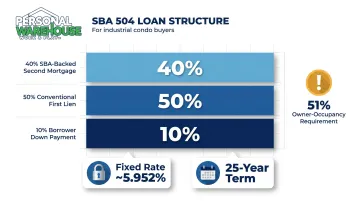
The SBA 504 loan program is the most common pathway for owner-occupants:
- 10% borrower down payment (vs. 20-35% typical for conventional commercial loans)
- 50% conventional first lien + 40% SBA-backed second mortgage
- Fixed rates currently around 5.952% for a 25-year term
- Requires 51% owner-occupancy of the purchased space
SBA 7(a) loans are a flexible alternative, covering up to $5 million with 25-year terms for real estate. Personal Warehouse works with preferred lenders experienced in both SBA 504 and 7(a) financing for their micro-flex condominium projects.
Owners pay real estate taxes individually on their unit. Ownership is permanent and transferable — you can resell, lease out, or pass the unit to heirs, unlike a lease, which permits none of these.
Key Benefits of Owning an Industrial Condo
Equity and Wealth Building
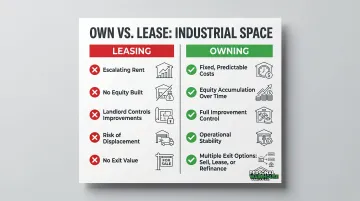
Mortgage payments build equity. Lease payments don't — they fund someone else's asset. Ownership converts a recurring business expense into a balance sheet item that can appreciate, be refinanced, or be sold.
SBA financing programs like the 504 loan are specifically structured for owner-occupied commercial real estate, making ownership more accessible than many business owners expect. A fixed monthly payment that builds equity beats an escalating rent check every time.
Cost Predictability and Expense Control
Leases renew on a landlord's terms. Ownership locks in your cost basis. With a fixed-rate mortgage, you know your occupancy cost a decade from now — a planning advantage that renting simply can't offer.
Key financial benefits of ownership include:
- Fixes occupancy costs against inflation and rent escalation
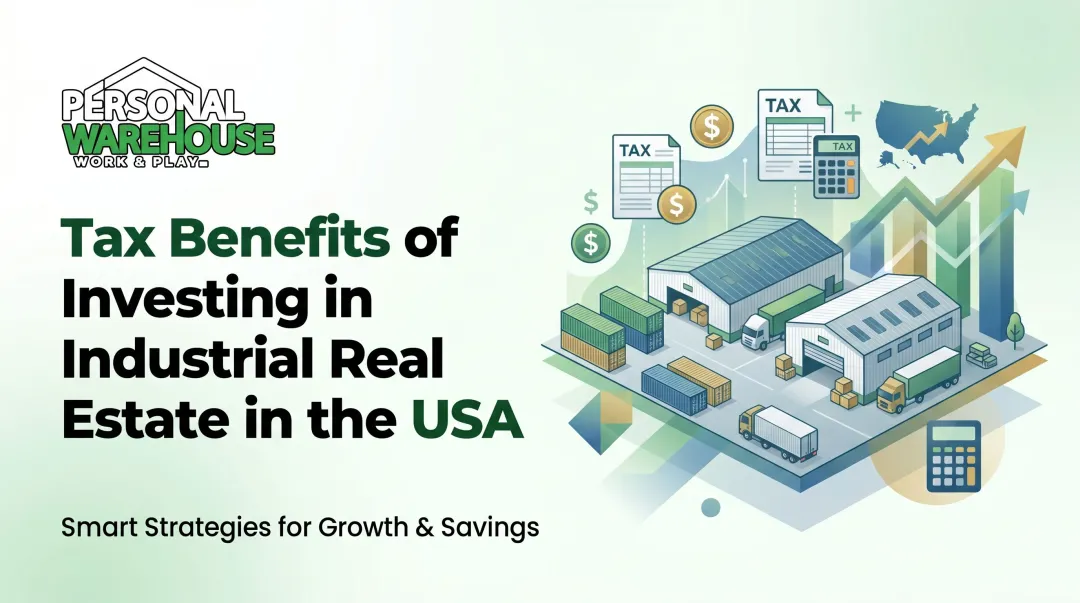
- Qualifies for depreciation deductions under standard commercial tax treatment
- Builds an asset you can leverage for future financing
- Eliminates landlord approval for improvements and modifications
Operational Stability
Landlords sell buildings. Tenants get displaced. Owning your industrial condo means your business location is yours to control — no lease non-renewals, no surprise relocations, no renegotiating from a weak position.
This stability matters most for businesses that invest in tenant improvements: custom electrical, specialized flooring, climate control, or equipment anchoring. When you own the space, those investments stay yours.
Appreciation and Exit Options
Well-located industrial space has held value through multiple economic cycles. As surrounding areas develop and industrial land becomes scarcer, owner-occupied units frequently appreciate alongside market demand.
When you're ready to exit, options include:
- Selling the unit outright (often at a premium to comparable lease rates)
- Leasing the space to generate passive income
- Refinancing to pull equity out for other business needs