This guide covers everything you need to make a smart storage decision: the three storage types (outdoor, covered, enclosed), how to size your space correctly, what proper preparation looks like for both RVs and boats, current cost ranges, and what separates a quality facility from a mediocre one.
TL;DR
- HOA restrictions affect 74.2 million Americans — off-site storage is often required, not optional
- Three storage types exist: uncovered (budget), covered (best value), and enclosed (maximum protection)
- Monthly costs range from ~$35 for uncovered RV storage to $1,000+ for enclosed boat storage
- Winterization prevents $800–$4,600 in freeze damage for roughly $50–$170 in prep costs
- Enclosed storage can reduce insurance premiums by 5–15% annually
Why You Need Dedicated RV and Boat Storage
HOA and Zoning Restrictions Make It Mandatory
According to the Community Associations Institute, approximately 358,000 community associations govern housing for 74.2 million Americans — roughly 28% of the U.S. population. Vehicle-type restrictions, including RV and boat prohibitions, are among the most common provisions in HOA governing documents.
Common restriction types vary by community:
| Restriction Type | What It Means |
|---|---|
| Absolute prohibition | No RV, boat, or trailer storage in driveways or yards |
| Hidden storage requirement | Vehicle must be enclosed or screened from street view |
| Temporary loading window | RV/boat allowed for 24–48 hours only |
| Size/type limits | Vehicles exceeding a certain length or height are prohibited |
Municipal zoning adds another layer. Local ordinances often restrict the number, visibility, and location of recreational vehicles on residential property — independent of HOA rules.
Those restrictions alone can force the decision. But even owners without HOA oversight have real financial reasons to choose dedicated storage.
The Real Cost of Improper Storage
Poor storage conditions create predictable, expensive problems:
- Freeze damage: Burst water lines cost $800–$1,500 to repair; full system replacement runs $2,000–$4,600
- UV degradation: Extended sun exposure chalks gelcoat, fades upholstery, and cracks rubber seals on both RVs and boats
- Theft: The NICB reported 4,461 watercraft stolen in 2022, with personal watercraft carrying only a 27% recovery rate
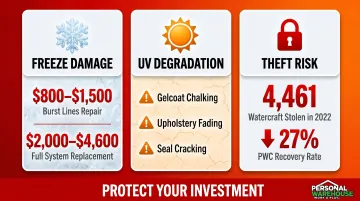
A few hundred dollars per year in storage costs looks very different when the alternative is a $3,000 plumbing repair or a stolen PWC.
Security You Can't Replicate at Home
Purpose-built storage facilities offer security measures that most driveways simply can't match:
- Gated entry with keypad or card access
- 24/7 video surveillance
- Perimeter fencing and well-lit grounds
These features go beyond peace of mind. Insurers typically offer 5–15% annual premium discounts for boats and RVs stored in facilities with these measures — and some carriers allow deeper seasonal adjustments for qualifying storage.
Types of RV and Boat Storage
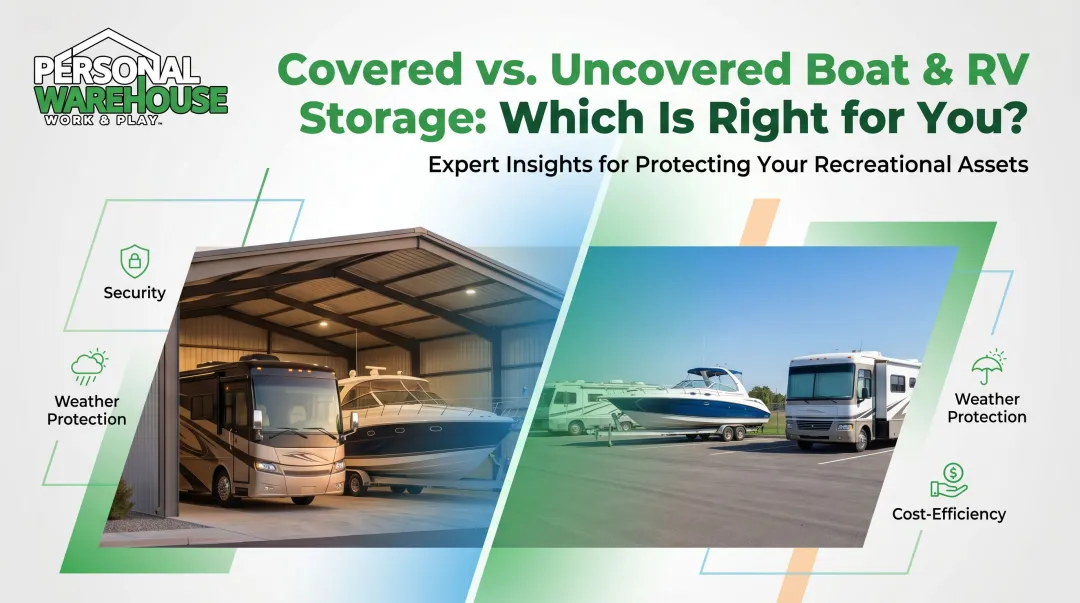
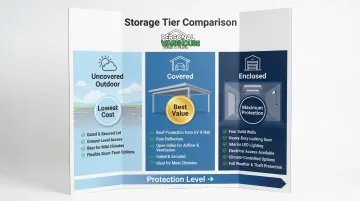
The industry uses three standard categories, each suited to a different need and budget.
Uncovered Outdoor Storage
Open-air parking in a secured, gated lot with no roof or walls. This is the most affordable option and works well for:
- Owners in mild climates with minimal hail or UV risk
- Seasonal storage for shorter periods
- Tight budgets where cost outweighs protection needs
A quality fitted cover (breathable, UV-resistant) reduces exposure risk for vehicles in uncovered spaces. It's not a substitute for a roof, but it helps.
Covered Storage
A carport-style roof protects from direct sun, rain, and hail while sides remain open for airflow. For most owners, this is the best value option. Key benefits:
- Prevents UV degradation of rubber seals and exterior surfaces
- Reduces interior heat extremes that stress upholstery and electronics
- Protects against hail without the premium price of full enclosure
- Maintains ventilation, reducing moisture buildup
If you're storing in a region with strong seasonal sun or frequent hail — common across Montana, Colorado, and the Southwest — covered storage is worth the step up from uncovered.
Enclosed Storage
Four walls, a locking overhead door, complete isolation from weather and environmental exposure. This is the right choice for:
- High-value Class A motorhomes, fifth wheels, or newer boats
- Owners storing in climates with extreme temperature swings
- Anyone who wants their investment protected year-round
Premium enclosed facilities include LED lighting, insulated walls and overhead doors, and electrical access for battery tending. Personal Warehouse units, for example, come standard with 100/150-amp 3-phase electrical service, all-LED lighting, full heating, and insulated overhead doors — features that keep temperature, moisture, and power needs covered throughout the storage period.
How to Choose the Right Storage Size
The Golden Rule: Measure Everything
Don't measure just the vehicle body. Measure the full footprint:
- RVs: Include the hitch, any rear ladder, and roof-mounted accessories
- Boats on trailers: Measure from the front of the tongue to the back of the motor
- Height: Measure from the ground to the tallest point — AC unit, tower, satellite dish
Leave at least 1–2 feet of clearance between your vehicle and the unit walls.
RV Size Reference Guide
| RV Type | Typical Length | Recommended Space |
|---|---|---|
| Teardrop / pop-up campers | 8–16 ft | 10×15 to 10×20 |
| Travel trailers | 12–35 ft | 10×20 to 10×25 |
| Class B motorhomes | 17–23 ft | 10×25 to 10×30 |
| Class C motorhomes | 20–33 ft | 10×25 to 10×35 |
| Fifth wheels | 22–40 ft | 10×30 to 10×40 |
| Class A motorhomes | 26–45 ft | 10×30 to 10×45+ |
Boat Size Reference Guide
| Boat Type | Length | Recommended Space |
|---|---|---|
| PWC / small boats | Under 16 ft | 10×15 to 10×20 |
| Bowriders, center consoles, pontoons | 16–26 ft | 10×25 to 10×30 |
| Cabin cruisers, sportfishing boats | 26–40 ft | 10×35 or larger |
The industry standard clear height for enclosed RV and boat storage is 14 feet. Boats with wakeboard towers can reach 11–13 feet on a trailer. Sailboats with fixed masts typically exceed this clearance entirely and may require uncovered storage or mast removal. Confirm height clearance with the facility before reserving a unit.
Best Practices: Preparing Your RV or Boat for Storage
Skipping prep steps is one of the most expensive mistakes RV and boat owners make — freeze damage alone can run $800–$4,600. Even inside an enclosed facility, an unprepared rig or boat can suffer serious damage.
RV Storage Preparation
For cold-climate owners — Montana winters being a good example — winterization isn't optional. The $50–$170 in prep costs prevents $800–$4,600 in freeze repairs.
Core RV prep steps:
- Clean interior and exterior — wash, wax, and remove all food and perishables
- Drain and flush all water systems — fresh tank, hot water heater, supply lines, toilet
- Add RV antifreeze — pump non-toxic antifreeze through all plumbing lines, faucets, and shower
- Fill fuel and add stabilizer — run the engine to circulate treated fuel
- Disconnect or tender the battery — a battery maintainer prevents drain during storage
- Inflate tires to proper pressure — use tire covers to reduce UV exposure and flat-spotting
- Seal exterior vents — breathable covers block pest entry while allowing airflow
- Inspect seals and slide-outs — address any gaps or cracks before they worsen
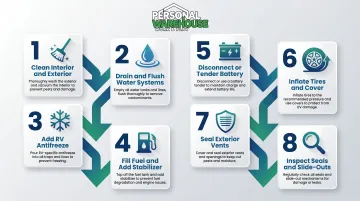
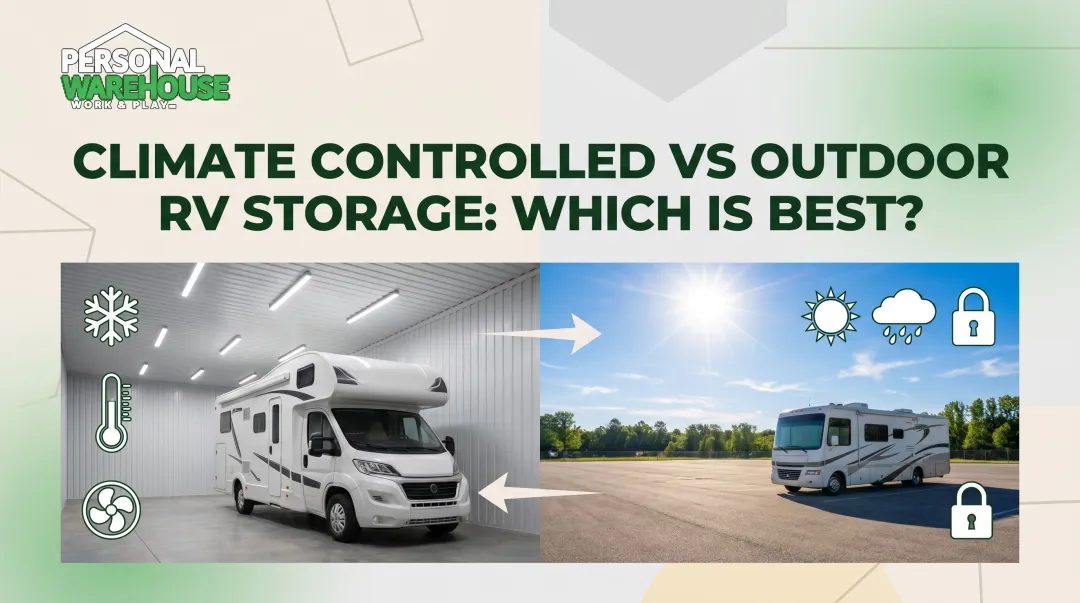
For outdoor or covered storage, use a breathable, UV-rated fitted RV cover. For enclosed storage, a light dust cover protects against fine debris and keeps the interior clean.
Boat Storage Preparation
Boats carry similar risks. BoatUS emphasizes that proper winterization is "absolutely critical" regardless of whether the vessel stays in water or goes on land.
Core boat prep steps:
- Flush the engine — especially after saltwater use; circulate marine antifreeze through the cooling system
- Stabilize fuel — fill tank to ~95% capacity, add marine stabilizer, run engine 10–15 minutes
- Change oil and filter — do it while warm to remove contaminants
- Fog the engine — spray fogging oil into the intake to prevent internal rust
- Drain all plumbing — freshwater tanks, lines, and water heater; add antifreeze where needed
- Service the battery — clean terminals, fully charge, and store in a cool dry location
- Remove valuables — electronics, safety equipment, cushions, and fabric items
- Cover properly — use a fitted cover with a bow support to prevent water pooling; in enclosed storage, a breathable cover prevents dust and mildew
How Much Does RV and Boat Storage Cost?
Storage costs vary widely depending on type, vehicle size, and location. Here's a current snapshot of typical monthly rates.
RV storage (per Extra Space Storage, 2026):
| Storage Type | Monthly Range |
|---|---|
| Uncovered outdoor | $35 – $363 |
| Covered | $75 – $400 |
| Enclosed | Up to $582+ |
Boat storage (per Storage.com, 2025):
| Storage Type | Monthly Range |
|---|---|
| Uncovered outdoor | $50 – $200 |
| Covered | $100 – $500 |
| Enclosed/indoor | $150 – $1,000+ |
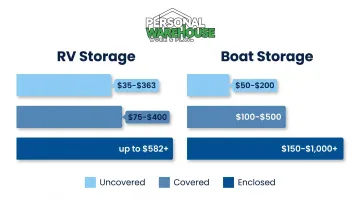
In the Bozeman, MT market specifically, boat storage starts around $30/month for basic outdoor parking, with covered and enclosed options scaling up from there — well below coastal market rates.
What Drives the Price
Three factors determine what you'll pay:
- Storage type — the biggest variable; enclosed typically costs two to three times more than uncovered
- Vehicle size — longer and taller units cost more across all storage types
- Location — coastal and urban markets run 2–3 times higher than inland or rural alternatives
How to Reduce Your Costs
- Ask about annual prepayment — many facilities discount monthly rates for long-term commitments
- Book early — reserving winter storage by August or September typically secures better rates and availability
- Get the full cost breakdown — facility fees, utilities, and access charges can add $100–$300 to the base monthly rate, so ask for total cost before committing
What to Look for in a Quality Storage Facility
Security and Access: Non-Negotiables
These features directly affect your insurance eligibility and claim outcomes, not just your peace of mind:
- Gated entry with keypad or keycard access
- 24/7 HD surveillance cameras covering the full lot
- Perimeter fencing with adequate lighting throughout
- On-site management or monitored access systems
Facilities with these features in place qualify for the 5–15% insurance premium discounts mentioned earlier. Ask your carrier what documentation they need from the facility.
Facility Design: What Matters for Large Vehicles
Security gets you in the door. For RVs and boats specifically, the physical layout of a facility matters just as much — look for:
- Wide drive aisles — a 90-degree access aisle needs at least 55 feet of width for large trailers
- Paved surfaces — gravel is common at budget facilities, but paved is cleaner and more stable
- 14-foot clear height minimum for covered or enclosed units (critical for towers, AC units, and fifth wheels)
- Electrical outlets per unit for battery tending during storage
- Dump stations and wash bays at higher-end facilities — less common because they require underground infrastructure, so their presence signals a well-capitalized operator
The Ownership Alternative
If you plan to store long-term, renting a space indefinitely starts to look like dead money. Personal Warehouse offers an alternative: enclosed storage units under an ownership structure comparable to a residential loan. Units come with LED lighting, insulated overhead doors, heating, and 100/150-amp electrical service as standard. Optional upgrades include mezzanines that expand usable space by up to 30%, restrooms, and air conditioning.
The 99-year ground lease structure means buyers own the unit itself and build equity over time. The Bozeman, MT project is currently under construction and accepting reservations, with delivery expected in 2026. Contact Personal Warehouse at 303-222-0768 or info@personalwarehouse.com for current availability and pricing.
Frequently Asked Questions
What is recreational vehicle parking?
Recreational vehicle parking refers to designated spaces or facilities where RVs, trailers, and motorhomes can be legally stored when not in use. This includes on-property storage (subject to local ordinances) and off-site dedicated storage facilities with varying levels of security and weather protection.
What is a recreational vehicle (RV) and what are common examples?
An RV is any vehicle designed or adapted for recreational travel or camping. Common types include Class A, B, and C motorhomes, travel trailers, fifth wheels, pop-up campers, and truck campers — ranging from compact weekend rigs to 45-foot full-time residences.
How much does RV and boat storage cost per month?
Monthly costs range from roughly $35 for uncovered RV parking to $1,000+ for premium enclosed boat storage. Storage type creates the biggest price gap, followed by vehicle size and location. The cost section above breaks this down in full detail.
What size storage space do I need for my RV or boat?
Measure your full vehicle length — tongue, hitch, ladder, and motor included, not just the body — then confirm exact dimensions with your facility. The size reference tables in this guide provide a solid starting point, and always factor in extra maneuvering room for wide trailers or boats with slide-outs.
How should I prepare my RV or boat for long-term storage?
Core steps include cleaning thoroughly, winterizing all water systems, stabilizing fuel, disconnecting the battery, sealing vents against pests, and covering the vehicle. The preparation section above has full checklists for both RVs and boats.
Is enclosed storage worth the extra cost for RVs and boats?
Generally, yes — especially if you own a high-value vehicle, live in a harsh climate, or simply want peace of mind. The cost difference between uncovered and enclosed storage typically runs $100–$300/month, which is far less than one freeze-damage repair or a hail-damaged roof. Enclosed storage often qualifies for insurance discounts that help offset the premium.