That gap is where the damage happens.
Most owners understand that outdoor storage carries some risk. Fewer recognize that the specific combination of covered shelter and on-site electrical access addresses the two most consistent sources of long-term deterioration: environmental exposure and electrical system neglect. This article makes the case for why that combination isn't a premium upgrade — it's the responsible baseline.
TL;DR
- Covered storage protects against UV, rain, snow, and hail: the leading causes of seal failure, roof damage, and exterior deterioration
- Shore power keeps batteries trickle-charged, preventing the permanent sulfation damage that parasitic drain causes within weeks
- Plugged-in dehumidifiers actively control interior moisture, stopping mold and air quality problems before they start
- Properly stored RVs retain 10–20% more resale value after 5–7 years compared to poorly stored equivalents
- One season of covered storage with electricity costs less than most single repair incidents it prevents
What Is Covered RV Storage with Electricity?
Covered RV storage means a parking space under a permanent roof or canopy, open on the sides but protected overhead. "With electricity" means the individual stall includes shore power access, typically a 30-amp or 50-amp hookup at the pedestal.
Where It Fits in the Storage Spectrum
| Storage Type | Monthly Cost | Weather Protection | Electrical Access |
|---|---|---|---|
| Open-lot (uncovered) | $30–$100 | None | Rarely |
| Covered outdoor | $50–$250 | Overhead protection | Sometimes |
| Enclosed/indoor | $100–$582 | Full | Varies |
| Climate-controlled | $500–$2,000+ | Full + temperature | Yes |
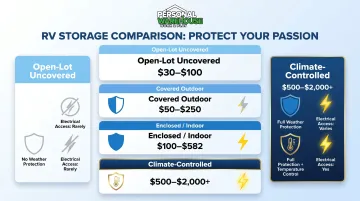
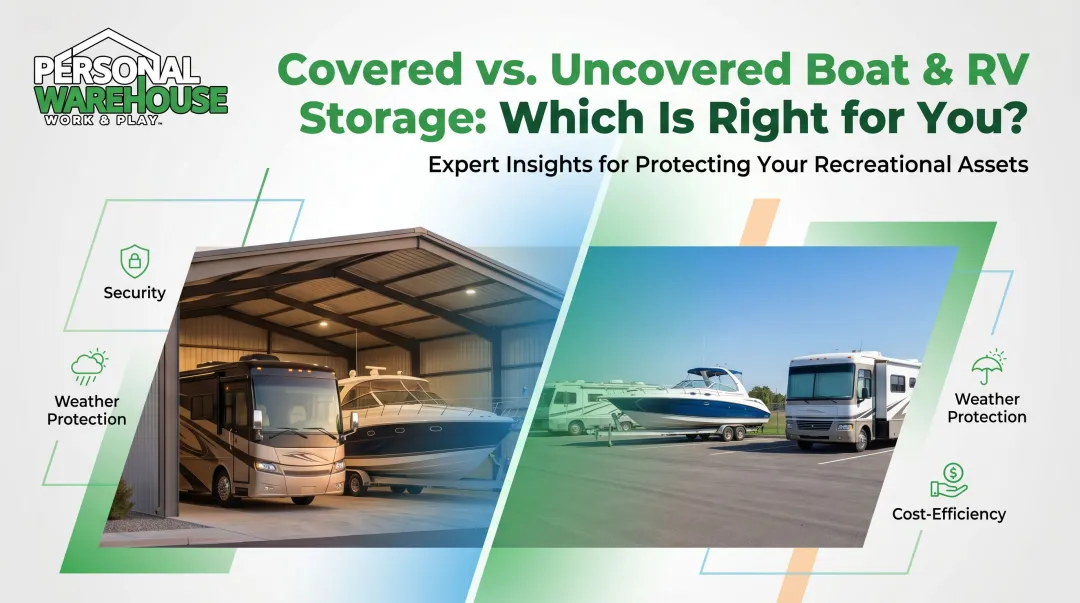
Covered storage with electricity occupies the practical middle ground: significantly more protection than open-lot parking at a fraction of the cost of a fully enclosed climate-controlled unit. For most RV owners, it's the configuration that delivers the best protection per dollar over an extended storage period.
Shore power is what separates passive parking from active maintenance. Without an outlet at the stall, you'd have to pull the vehicle out just to handle basic upkeep — including:
- Running a trickle charger to preserve battery health
- Powering a dehumidifier to control interior moisture
- Using maintenance lighting for inspections or repairs
Key Advantages of Covered RV Storage with Electricity
Physical Protection from the Elements
A permanent canopy keeps the RV dry and shaded, continuously, without any action from the owner. UV radiation degrades EPDM rubber roof membranes, dries out window seals and caulking, fades exterior paint, and discolors decals — all gradually, all invisibly, until the damage is expensive. Rain and freeze-thaw cycles force water into micro-cracks in seals that UV has already weakened. Snow load is a separate problem: most RV roofs can safely support only 20–40 pounds per square foot, meaning 12 inches of fresh snow or 3–5 inches of packed snow can exceed safe limits — and wet snow weighs three times more than dry.
What this costs when it goes wrong:
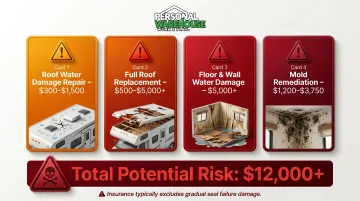
- Roof water damage repair: $300–$1,500
- Full RV roof replacement: $500–$5,000+ depending on size
- Floor and wall water damage: $5,000+
- Mold remediation: $1,200–$3,750 on average
RV insurance typically covers water damage only when it's sudden and accidental — a storm event, not a slow seal failure. Gradual leaks from deferred maintenance are the owner's expense.
Covered storage eliminates snow accumulation and UV exposure entirely. That's especially damaging in climates like Montana, Colorado, Michigan, and Wisconsin, where Personal Warehouse operates, and where winters routinely produce the conditions that hurt unprotected roofs.
Electricity at the stall goes further than shelter alone: you can run a dehumidifier inside the RV without moving it, manage moisture year-round, and use maintenance lighting — all without giving up the protected position.
Battery Health and Electrical System Preservation
RV batteries drain even when the vehicle isn't running. CO detectors, LP gas sensors, control boards, radio memory — all of these draw current continuously. Over months of storage, that parasitic load depletes batteries to damaging levels.
For lead-acid and AGM batteries, discharging below 50% depth of discharge causes sulfation — a chemical process that permanently reduces capacity.
A fully discharged lead-acid battery can freeze at temperatures as high as 20°F, cracking the case completely. Lithium (LiFePO4) batteries are more tolerant, but storing them fully depleted can trigger protection circuits that require a professional reset.
Battery replacement is not cheap:
- Lead-acid house bank: $1,200–$2,000
- Lithium (LiFePO4) house bank: $3,000–$6,000
A trickle charger or smart battery maintainer connected to shore power at the stall prevents all of this. The charger monitors battery voltage and delivers a low-level charge to keep cells at optimal levels throughout storage, without overcharging. No manual visits to recharge. No return trips to find a dead system.
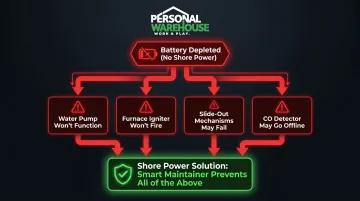
The downstream consequences of a depleted battery compound the cost. A dead 12V system means:
- Water pump won't function
- Furnace igniter won't fire
- Slide-out mechanisms may not operate
- Carbon monoxide detector may be offline
Each of these creates diagnostic time and potential repair costs before the owner can even begin a trip. Shore power access prevents that entire cascade.
Active dehumidification is the other benefit. Extra Space Storage notes that running a powered dehumidifier is one of the most effective ways to limit interior moisture during storage — but it requires electricity. Without it, owners are limited to passive absorbers that need frequent replacement and provide far less consistent control, especially during humidity spikes.
Year-Round Readiness and Long-Term Resale Value
An RV stored properly doesn't need restoration before each trip. One that isn't stored well usually does.
The pre-trip difference between a well-stored and poorly stored RV can include: a full battery charge cycle (hours), seal inspection and potential resealing (hours to days), water damage assessment, and one or more shop appointments — all before departure.
That lag matters. An RV that takes two weeks and several hundred dollars to bring back online gets used less, which compounds the opportunity cost of a significant investment.
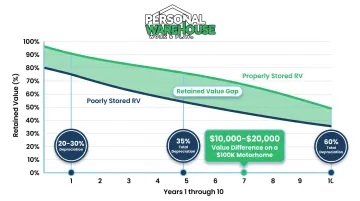
Resale value tells the same story. A well-maintained, properly stored RV may retain 10–20% more value after 5–7 years compared to a poorly maintained equivalent. On a $100,000 motorhome, that's a $10,000–$20,000 difference at sale — driven entirely by storage and maintenance decisions, not age.
RVs already depreciate steeply: approximately 20–30% in year one, 35% by year five, and 60% by year ten. Proper storage doesn't reverse depreciation, but it dramatically narrows the gap between what an RV is worth on paper versus what a buyer will actually pay for it.
What Happens When Covered Storage with Electricity Is Skipped
Open-lot storage or covered storage without electrical access creates a predictable set of compounding problems:
- UV and weather exposure degrades seals and roof membranes season by season — invisibly, until remediation is unavoidable
- Battery depletion frequently causes permanent cell damage, so the first cost of a new travel season becomes battery replacement — before the first mile
- Interior moisture accumulates without active dehumidification, producing mold and mildew in upholstery, cabinetry, and flooring that's difficult to eliminate
- Insurance won't cover it — gradual damage from neglected maintenance is excluded from most RV policies
Each of those consequences carries a price tag. Covered storage with electricity typically runs $100–$250/month, or $1,200–$3,000 per year. A single water intrusion event from a failed roof seal can cost $5,000+ if it reaches floors and walls. One battery bank replacement runs $1,200–$6,000. Mold remediation averages $2,300. A single bad storage season can cost more than years of proper storage would have.
How to Get the Most Value from Covered RV Storage with Electricity
The infrastructure only works if the owner uses it. A few practices make the difference:
Before entering storage:
- Deep clean the interior to eliminate pest attractants
- Fill the fuel tank and add stabilizer
- Inspect and seal any exterior penetrations around vents, plumbing, and windows
- Install tire covers to prevent UV-related dry rot
- Winterize plumbing with compressed air or non-toxic antifreeze
Once in the covered stall:
- Connect a smart battery maintainer to shore power; verify it's functioning on each visit
- Run a powered dehumidifier inside the RV; check and empty the reservoir regularly
- Use the available power for maintenance lighting during inspections
Ongoing inspection schedule:
- Monthly: Confirm battery maintainer is operating, check security hardware, visual inspection of exterior
- Quarterly: Inspect roof seals, window seals, and slide-out edges for any developing cracks or gaps
That kind of maintenance routine depends entirely on what your storage facility provides. Personal Warehouse units in Bozeman, MT include 100/150-amp 3-phase electrical service with individually metered utilities, fully heated interiors, and insulated overhead doors — everything needed to run a maintainer, dehumidifier, and inspection lighting without workarounds or extension cords.
Conclusion
Covered RV storage with electricity addresses the two factors that consistently shorten RV lifespans and erode resale value: weather exposure and electrical system neglect. Neither problem announces itself. Both are slow, cumulative, and largely invisible until the repair estimate arrives.
The math consistently favors proper storage. One season of covered storage with electricity costs less than most single repair incidents it would have prevented. Over five to ten years, the difference compounds into real money — both in avoided repairs and in what a buyer will pay at sale.
For RV owners in Montana, Colorado, Michigan, Wisconsin, Georgia, Texas, and beyond, Personal Warehouse provides ownable storage units built to meet this standard — with premium insulation, LED lighting, and the infrastructure to keep your RV protected year-round. Storing properly from the start is a straightforward way to protect both the vehicle and what it's worth down the road.
Frequently Asked Questions
Is it better to store an RV indoors or out?
Fully enclosed indoor storage offers the highest protection but at a premium cost (often $100–$582/month or more). Covered outdoor storage with electricity is the practical middle ground for most owners, protecting against UV, precipitation, snow load, and battery failure at a significantly lower price point.
Do some storage facilities have electrical outlets at stalls?
Yes — most RV storage facilities offer 30-amp or 50-amp shore power hookups at individual stalls. This is what enables battery maintenance charging, dehumidifier operation, and powered upkeep during long-term storage. Availability varies by facility, so confirm before committing.
How does shore power access help maintain RV batteries during storage?
A trickle charger or smart battery maintainer connected to shore power keeps the battery at an optimal charge level throughout storage. This prevents the parasitic drain and deep discharge that permanently damage lead-acid and AGM cells, leaving onboard systems like the water pump, furnace, and slide-outs inoperable when you retrieve the vehicle.
What's the difference between covered storage with electricity and a climate-controlled indoor unit?
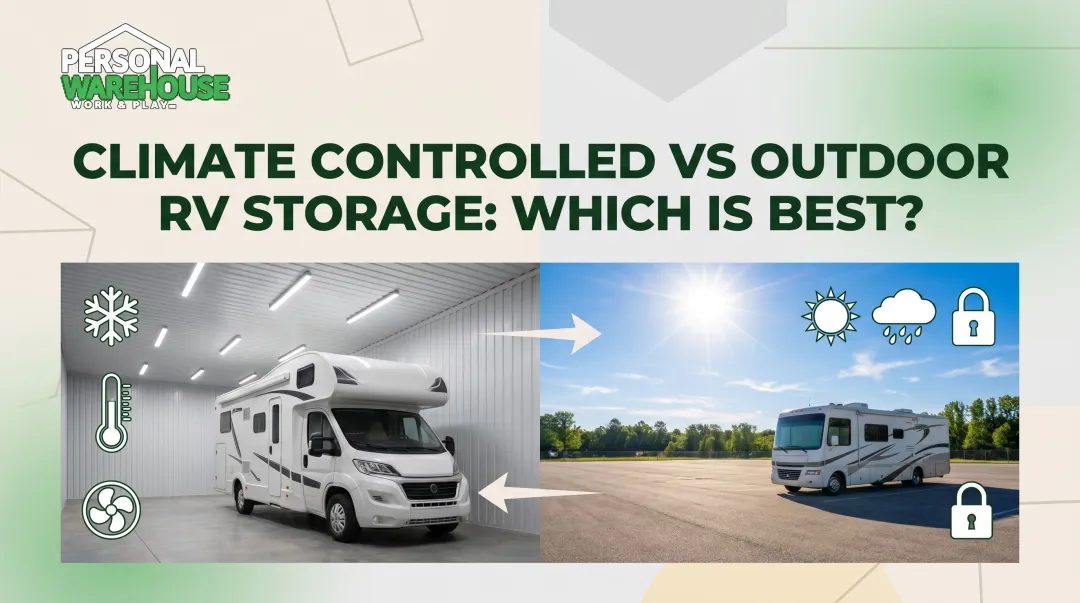
Covered storage with electricity provides overhead weather protection, UV blocking, and shore power access, but without regulated temperature or humidity. Climate-controlled indoor units add those controls at significantly higher cost, making them most justified for high-value motorhomes or locations with extreme heat or humidity.
Can I sleep in my storage unit for one night?
No. Sleeping or living in a commercial storage unit is prohibited at virtually all facilities due to zoning, building, and health codes. The prohibition covers legal occupancy status, not amenities, so electrical access doesn't change that.
How often should I check on my RV during long-term covered storage?
Monthly visits are the practical minimum: verify the battery maintainer is functioning, check security hardware, and do a quick exterior scan. Inspect roof seals, window seals, and slide-out edges quarterly to catch developing issues before they become costly repairs.