For a vehicle that costs anywhere from $30,000 to well over $200,000, that's a significant gamble. Climate-controlled storage addresses the environmental threats that standard outdoor or covered parking simply cannot. This article breaks down exactly what those threats are, what they cost when ignored, and why quality indoor storage is one of the most financially sound decisions an RV owner can make.
TL;DR
- Climate-controlled storage maintains 55°F–85°F temperatures and 30%–50% humidity to prevent material degradation year-round
- Freeze damage to RV water systems can cost $3,000 or more; climate-controlled storage eliminates that risk
- Mold can begin growing within 24–48 hours in enclosed, humid environments — regulated humidity stops it before it starts
- RVs lose up to 20% of their value in year one; weather-related damage deepens that loss fast
- Climate-controlled storage matters most in states with harsh seasonal swings: Montana, Wisconsin, Florida, Texas, Georgia, and the Carolinas
What Is Climate-Controlled RV Storage?
Not all "climate-controlled" storage is the same, and the distinction matters.
The Self Storage Association acknowledges that historically "no association, group, or organization has put to paper a definition or requirement" for the term — meaning many facilities market temperature-only storage as fully climate-controlled. For RV owners, that gap in definition can mean thousands of dollars in moisture-related repairs.
Here's how the three main storage types actually differ:
| Storage Type | Temperature Control | Humidity Control | Best For |
|---|---|---|---|
| Outdoor/Covered | ❌ None | ❌ None | Short-term, low-value vehicles |
| Temperature-Controlled | ✅ Yes | ❌ No | Basic indoor protection |
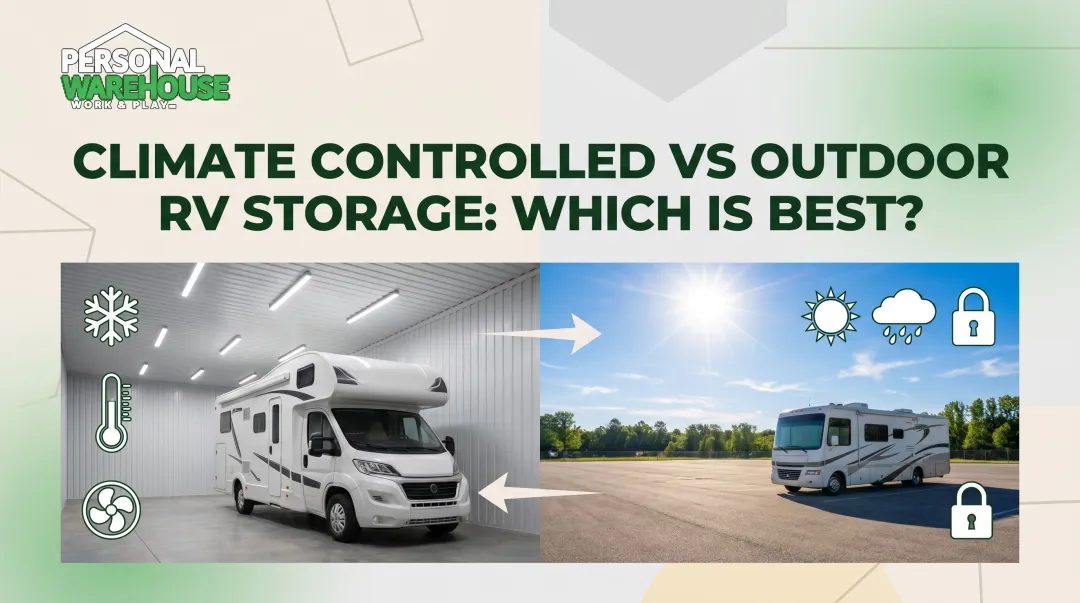
| Climate-Controlled | ✅ Yes | ✅ Yes | Long-term RV preservation |
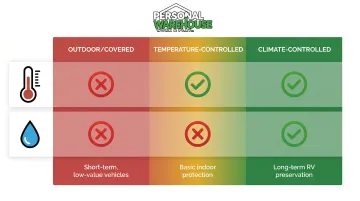
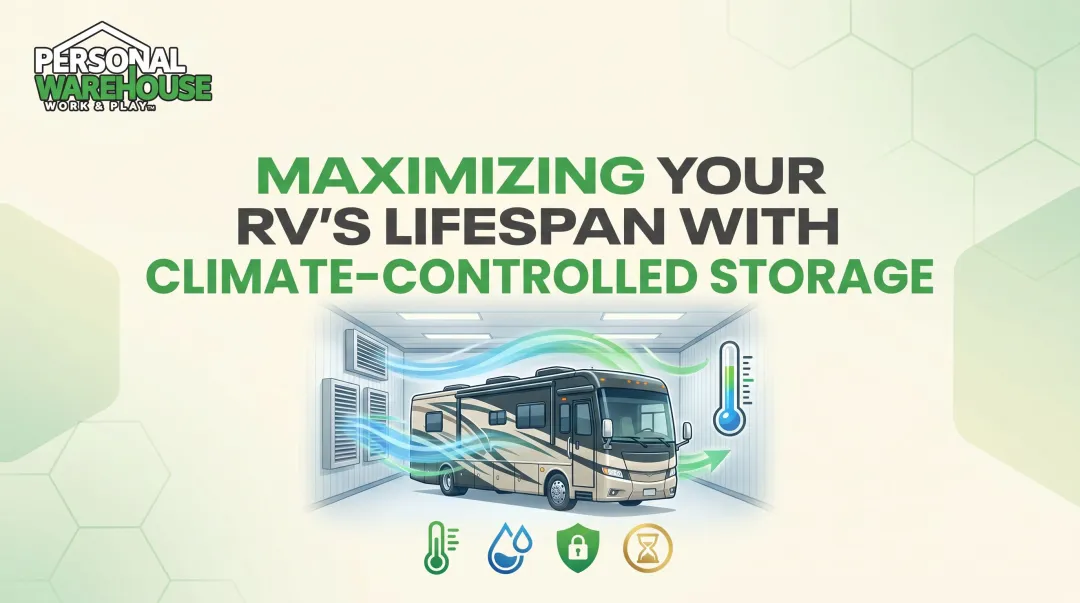
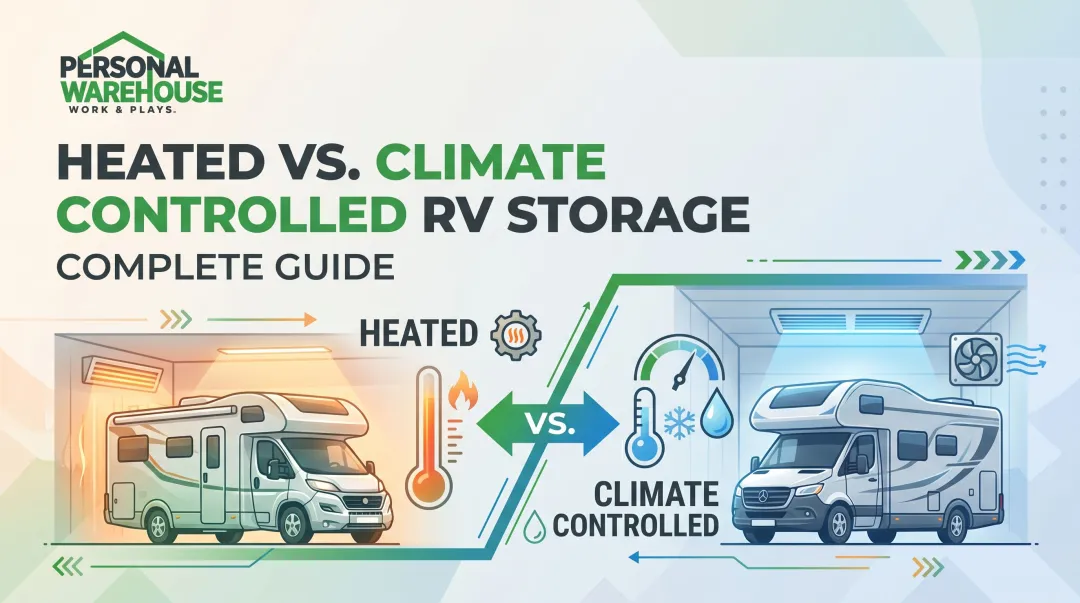
What separates the bottom two rows matters more than most owners realize. True climate-controlled storage manages both temperature (typically 55°F–85°F) and relative humidity (30%–50%) using HVAC systems, dehumidifiers, and high-efficiency insulation. Temperature-only facilities prevent freeze damage but do nothing to stop mold, corrosion, or moisture-related deterioration inside the cabin.
RVs are especially vulnerable to humidity damage. Rubber roof membranes, slide-out seals, wood cabinetry, soft furnishings, and onboard electronics all degrade when exposed to persistent moisture — and a temperature-only unit won't stop that process. Knowing what you're actually paying for before signing a storage agreement is the first step toward protecting what's inside.
Key Benefits of Climate-Controlled RV Storage
Benefit 1: Protection from Temperature Extremes
RVs are built from a wide range of temperature-sensitive materials: rubber roof membranes, PVC plumbing, slide-out seals, adhesive-bonded sidewalls, upholstery, and sensitive electronics. Every one of these materials reacts to sustained temperature swings — expanding in heat, contracting in cold, repeating that cycle until something cracks, warps, or separates.
Climate-controlled storage eliminates that cycle by maintaining stable interior temperatures year-round.
Why freeze damage is particularly destructive:
In northern climates — Montana, Wisconsin, Michigan, Colorado — RV pipes typically begin freezing when exterior temperatures drop to 20°F or below. Most RV plumbing runs through unheated floor cavities and exterior walls, which means even brief cold snaps can cause serious damage. According to Roamly, burst pipe repairs and associated water damage can cost $3,000 or more — while professional winterization runs just $85–$150.
Climate-controlled storage removes the freeze risk entirely, without requiring owners to re-winterize every season.
Heat damage is just as real in the South:
In Texas, Florida, and Georgia, sustained summer heat causes caulk and rubber seals to dry out, crack, and shrink. This accelerates water intrusion — and once water gets between sidewall layers, delamination begins. Minor delamination repairs run $300–$600; extensive damage climbs to $1,000–$3,000 or more.
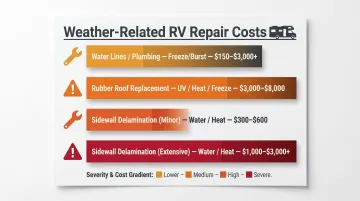
Repair cost reference:
| Component | Damage Type | Estimated Repair Cost |
|---|---|---|
| Water lines/plumbing | Freeze/burst | $150–$3,000+ |
| Rubber roof (full replacement) | UV/heat/freeze | $3,000–$8,000 |
| Sidewall delamination (minor) | Water/heat | $300–$600 |
| Sidewall delamination (extensive) | Water/heat | $1,000–$3,000+ |
One bad winter or summer in outdoor storage can trigger multiple repairs from this list simultaneously.
Benefit 2: Moisture and Humidity Control
Humidity is the threat most RV owners underestimate — and it creates the most expensive, hardest-to-reverse damage. When relative humidity inside a sealed RV cabin exceeds 55%, two processes accelerate: mold colonization and metal corrosion.
The EPA recommends keeping indoor humidity between 30% and 50% to inhibit both. Climate-controlled storage maintains exactly that range. Outdoor and temperature-only storage does not.
How fast mold actually develops:
The EPA confirms that mold can begin growing on wet or damp materials within 24–48 hours if conditions aren't corrected. In an enclosed RV cabin where humidity isn't actively managed, a single condensation event — common during spring shoulder seasons — is enough to start the process. Soft furnishings, mattresses, carpet, and wood cabinetry absorb moisture quickly and provide ideal conditions for mold to spread behind wall panels and under flooring.
General mold remediation costs range from $1,200 to $3,750, with the national average around $2,300–$2,400. In an RV, costs vary widely depending on how much of the interior structure needs replacement.
Beyond mold — corrosion matters too:
The Self Storage Association notes that once relative humidity exceeds 50–55%, corrosion rates on metal components increase exponentially. For stored RVs, that means the chassis, undercarriage, roof hardware, and electrical connections are all at risk. Corroded wiring and structural components don't always show up on a casual walkthrough — they surface in pre-sale inspections or during the first trip of the season.
This risk is highest in:
- Florida, Georgia, and South Carolina — chronic high ambient humidity
- Coastal regions — salt air compounds corrosion rates
- Spring storage transitions in drier states like Montana — temperature swings cause condensation buildup even when the outdoor climate seems manageable
Benefit 3: Resale Value and Reduced Maintenance Costs
Climate-controlled storage is an investment decision. The annual premium over standard outdoor storage is typically a fraction of what a single major weather-related repair costs.
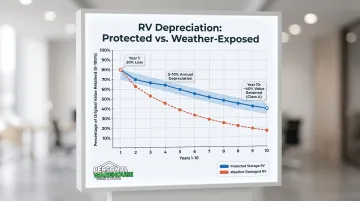
RV depreciation is already steep:
- Year 1: Up to 20% value loss
- Years 2–5: An additional 5–10% per year
- Year 10 (Class A): Cumulative depreciation of approximately 60%
Weather-related damage — UV fading, delaminated sidewalls, cracked seals, mold odors, corroded frames — pushes RVs further down that depreciation curve, beyond what normal age-related wear would cause.
Dealers and private buyers scrutinize condition closely. An RV with faded paint, visible seal cracking, or a musty interior commands lower offers than a comparable unit with clean records and an intact exterior. Well-maintained, indoor-stored RVs sell faster and at higher prices than weather-worn alternatives.
What insurance won't cover:
Progressive confirms that RV insurance generally does not cover freeze damage from neglected maintenance, mold damage, or deterioration from worn seals. The most common climate-related damage categories fall entirely on the owner — meaning there's no financial backstop when outdoor storage goes wrong.
When this matters most:
Owners who plan to sell or trade within 3–7 years see the strongest return from choosing climate-controlled storage early. Each protected season preserves condition and supports a higher exit price.
What Happens Without Climate-Controlled Storage
A single outdoor winter or summer storage season can produce a surprisingly long damage list. These are the standard findings on RVs that inspectors see after just a few seasons outdoors.
Common damage from outdoor storage:
- UV degradation: Roof membranes and sidewall surfaces deteriorate with sun exposure; EPDM membranes need inspection every 6 months and full replacement every 10–20 years without protection
- Rubber seal failure: Slide-out seals, window gaskets, and roof seams shrink and crack, opening gaps that let water in
- Freeze damage bursts plumbing — even partial winterization leaves water in traps and valves
- Tire flat-spotting develops when a stationary RV sits on concrete for months under full vehicle weight
- Delamination: Water through failed seals separates sidewall layers, often invisibly until the damage is severe
Each storage season adds new damage on top of unresolved wear. A seal that cracked in year one allows water intrusion in year two. That moisture causes mold in year three. By year four, remediation costs exceed what three years of climate-controlled storage would have cost.
Mold behind wall panels, corroded electrical connections, and delaminating sidewalls are invisible during casual walkarounds. They surface in pre-sale inspections, at exactly the moment you can least afford them.
How to Get the Most Value from Climate-Controlled RV Storage
The storage facility matters, but so does how you prepare your RV before it goes in.
Choosing the Right Facility
Look for facilities that actively regulate both temperature and humidity — not just facilities that keep the space heated. Key indicators of a quality climate-controlled RV storage facility:
- High-efficiency insulation throughout the structure
- Sealed, insulated overhead doors (not just standard metal doors)
- Active HVAC with documented temperature and humidity ranges
- Adequate unit size and door clearance for your RV class
Personal Warehouse facilities use high-efficiency insulation and insulated overhead doors engineered to hold interior temperatures steady through Montana's wide seasonal swings — a practical advantage over facilities that rely on basic heating alone. The Belgrade, MT location at 105 Copper Ranch Road is currently accepting reservations for 2026.
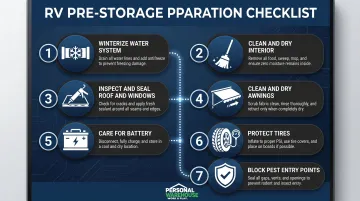
Pre-Storage Preparation Checklist
Once you've selected the right facility, preparation on your end determines how well your RV comes out of storage. Even in a well-controlled environment, these steps matter:
- Winterize the water system — drain all tanks, blow out lines at 30–40 PSI, add RV antifreeze to P-traps
- Clean and dry the interior thoroughly — remove all food, liquids, and perishables; vacuum all surfaces
- Inspect and seal the roof and windows — re-caulk any cracked seams before storage, not after
- Clean and dry awnings — store retracted only when completely dry to prevent mold
- Care for the battery — remove and store with a trickle charger, or maintain on shore power monthly
- Protect the tires — place wood or non-freezing material beneath tires; inflate to manufacturer PSI
- Block entry points for pests — seal vents and pipe openings with steel wool or aluminum foil
Check In Periodically
Monthly check-ins catch problems early. A missed seal is easy to fix in week two — by month four, it's a remediation project. Even in a well-controlled environment, it's worth spending 20 minutes monthly to confirm everything looks right.
Conclusion
Climate-controlled storage is a straightforward risk-management decision. When a vehicle worth tens of thousands of dollars sits parked for months at a time, where it's stored directly determines how much it's worth when you're ready to use it again.
The cost of quality indoor storage — typically 25–50% more than outdoor alternatives — is consistently less than the cost of a single major weather-related repair. Over multiple storage seasons, that gap widens considerably. Add the resale value impact and insurance exclusions for neglected-maintenance damage, and indoor storage is the clear choice for owners who treat their RV as an asset worth protecting.
If you're evaluating storage options for your RV, Personal Warehouse offers ownable indoor storage units across Montana and multiple U.S. locations — spaces designed for serious owners who want security, quality, and long-term value from their investment. The Bozeman, MT location is currently accepting reservations for 2026 — contact the team at 303-222-0768 or info@personalwarehouse.com to learn more.
Frequently Asked Questions
Frequently Asked Questions
Is it worth it to get climate-controlled RV storage?
For most RV owners — particularly those storing over winter or in high-humidity climates — yes. Freeze damage alone can cost $3,000+, and that's a single event. The annual cost of climate-controlled storage is typically less than one major weather-related repair, and it protects resale value over every storage season.
Is it better to store an RV indoors (climate-controlled) or outdoors?
Indoor climate-controlled storage offers protection that outdoor or covered options can't match: no moisture intrusion, no UV degradation, no freeze-thaw cycles, and significantly reduced pest risk. For any RV with meaningful value or planned long-term use, it's the more reliable option.
Can mold grow in a climate-controlled RV storage unit?
A well-maintained climate-controlled unit regulates humidity to levels that inhibit mold growth. However, if mold is already present inside the RV before storage, it can continue developing regardless of the environment. Clean and fully dry the interior before storage.
Can climate-controlled RV storage be a tax write-off?
Possibly. IRS Publication 587 allows storage deductions for RVs used as a principal place of business. Your situation must qualify under IRS rules for exclusive and regular business use — consult a tax professional before claiming it.
What temperature should climate-controlled RV storage be set to?
Most facilities maintain 55°F–85°F, which prevents both freeze damage and heat-related degradation. Humidity should be kept between 30% and 50%; above 55%, mold and corrosion rates increase significantly.
How much does climate-controlled RV storage cost compared to standard storage?
Climate-controlled indoor storage typically runs $150–$400+ per month, compared to $27–$120 for outdoor uncovered storage. That premium (roughly 25–50% more) is generally less than the cost of a single major repair caused by improper storage conditions.