Temperature swings, humidity buildup, and condensation don't stop at a garage door. In an unheated storage building in Montana or Wisconsin, interior temperatures can drop just as low as the air outside — and a boat sitting in that environment, even sheltered from snow, can still suffer freeze damage, corrosion, and mold growth over a long winter.
This guide breaks down exactly what separates the two storage types, presents a side-by-side comparison, and gives you a clear framework for deciding which option fits your boat, your budget, and your climate.
TL;DR
- Climate-controlled storage regulates both temperature and humidity, blocking freeze-thaw damage, mold, and corrosion
- Standard indoor storage shelters boats from rain, snow, and UV — but doesn't regulate temperature or humidity inside
- Climate-controlled units typically cost $50–$100/month more than standard indoor storage
- One gelcoat restoration alone can run $6,000–$10,000 — often exceeding years of climate-control premiums
- Fiberglass hulls, wood interiors, and electronics-heavy boats stored in cold or humid climates benefit most from climate control
- With proper winterization, aluminum-hulled boats in mild climates can fare well in standard indoor storage
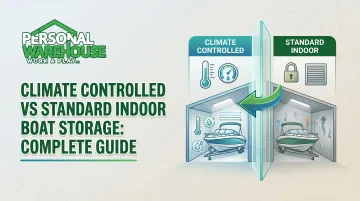
Climate-Controlled vs. Standard Indoor Boat Storage: Quick Comparison
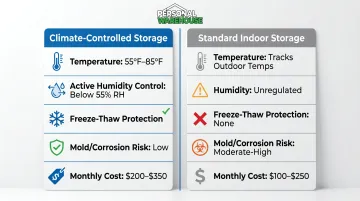
| Factor | Climate-Controlled | Standard Indoor |
|---|---|---|
| Temperature | Held at 55°F–85°F year-round | Tracks outdoor ambient temps |
| Humidity control | Active dehumidification; typically below 55% RH | Unregulated; varies by season |
| Freeze-thaw protection | Yes; stays above freezing | No; interior can drop below 32°F |
| UV protection | Yes (enclosed) | Yes (enclosed) |
| Mold/corrosion risk | Low | Moderate to high in humid or cold climates |
| Monthly cost | $200–$350/month | $100–$250/month |
| Best suited for | High-value boats, fiberglass, wood, electronics, cold/humid regions | Aluminum hulls, mild climates, short storage durations |
What Is Climate-Controlled Indoor Boat Storage?
Climate-controlled storage is an enclosed facility that actively manages both temperature and humidity using HVAC systems and high-efficiency insulation, holding stable conditions year-round regardless of outside weather.
Most quality facilities maintain temperatures between 55°F and 85°F year-round, with humidity kept below 55% relative humidity. That combination addresses the two biggest threats to stored boats: freeze-thaw cycles and moisture-driven deterioration.
Freeze-Thaw Damage
When water seeps into micro-cracks in a fiberglass hull, it freezes, expands, and widens those cracks — and each cycle compounds the damage. The same process affects engine cooling passages, hoses, livewells, and any water line that wasn't completely drained.
The BoatUS Foundation notes that boats stored on land are especially vulnerable because air loses heat much faster than water. A single cold snap can push an unheated storage unit well below freezing.
Climate-controlled storage eliminates this risk by holding temperatures above the 32°F threshold all winter.
Humidity and Material Degradation
Uncontrolled humidity is the slower-acting threat. Above 60% RH, mold spores become active and begin colonizing upholstery, carpet, and interior surfaces. Metal hardware and electrical connections corrode faster. Fiberglass delamination — where the hull layers separate — is directly tied to prolonged moisture exposure.
For boats previously used in saltwater environments, the risk is even higher. Research published in Materials (Alcantara et al., 2017) shows that magnesium chloride — found in road salt and coastal residue — can trigger corrosion at humidity levels as low as 35% RH, well below the mold threshold.
Active dehumidification keeps moisture levels in check while improving air circulation — protecting wiring and sensitive electronics from the slow degradation that stagnant, humid air causes over a long storage season.
What to Look for in a Facility
Key indicators of a quality climate-controlled facility:
- High-efficiency insulation in walls, ceiling, and floors
- Insulated overhead doors — a critical barrier against outside air infiltration
- Stable, well-maintained HVAC systems
- Good airflow and ventilation throughout the space
- Secure access and pest deterrence
Personal Warehouse's Bozeman, MT facility is built with high-efficiency insulation and insulated overhead doors specifically rated for the region's climate — where January temperatures regularly drop into the single digits and consistent internal conditions aren't optional.
When Climate-Controlled Storage Makes the Most Sense
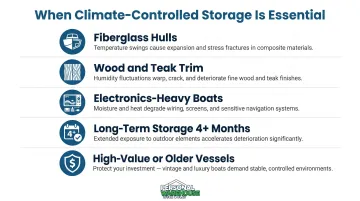
- Fiberglass boats with gel coat finishes susceptible to cracking
- Vessels with teak or wood trim
- Boats with complex electronics (fish finders, chartplotters, stereo systems)
- Any boat stored for 4+ months in a state with hard winters — Montana, Wisconsin, Michigan, Colorado
- High-value or older boats where a single season of humidity or freeze damage can generate repair bills that exceed years of storage fees
What Is Standard Indoor Boat Storage?
Standard indoor storage means a sheltered, enclosed structure (a warehouse, barn-style building, or storage bay) that keeps a boat out of direct contact with rain, snow, sun, and wind. What it does not do is regulate what happens to the air inside that structure.
What It Does Well
Compared to outdoor storage, standard indoor is a meaningful upgrade:
- Eliminates UV exposure, which causes photo oxidation and gelcoat fading
- Keeps the hull clean and dry from precipitation
- Reduces wind-related stress on covers and fittings
- Provides a degree of pest deterrence in well-maintained facilities
- Removes the boat from direct weather events (hail, ice storms, fallen debris)
The Key Limitation
Both storage types block UV damage effectively. Where they diverge is temperature and moisture — and in cold climates, that gap matters.
A standard indoor unit can reach the same sub-freezing temperatures as the outdoors. Interior temperatures in an unheated Montana or Wisconsin warehouse might hit 10°F–20°F on a hard January night. A boat sitting in that environment still needs full winterization — the shelter changes nothing about the cold it faces.
Mariners General Insurance Group warns that water left in engines, pipes, or bilges can freeze and expand, cracking expensive components — and that inadequate winterization is one of the most common triggers for denied insurance claims.
When Standard Indoor Storage Works
Standard indoor is a reasonable choice when:
- The boat is aluminum-hulled with minimal electronics
- Storage duration is under 90 days in a mild climate
- Professional winterization is completed before storage — engine flushed, antifreeze circulated, water systems drained, battery removed
- The owner understands and accepts the residual moisture and temperature risks
- Cost savings are a priority and the vessel's replacement value is lower
Done right, standard indoor storage is a cost-effective option. Whether it's enough depends on your climate, your boat, and how long it sits.
Which Indoor Boat Storage Type Is Right for You?
Four variables determine the right call: your climate, your boat's construction, the vessel's value, and how long it's being stored.
Geography and Climate
This is the most important factor. If you're storing in a state with hard winters — Montana, Michigan, Wisconsin, Colorado — where temperatures regularly drop below 20°F, climate-controlled storage is the stronger choice even for properly winterized boats. No antifreeze treatment fully compensates for repeated freeze-thaw cycles inside a hull.
For milder states like Georgia or Florida, the primary risk shifts from freezing to humidity. Summer RH levels in Atlanta or Houston regularly exceed 75–80% — well above the mold dormancy threshold — so dehumidification matters just as much as temperature control.
Boat Material and Value
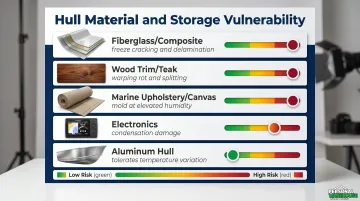
Hull material and interior construction determine vulnerability:
- Fiberglass and composite hulls — susceptible to freeze cracking and delamination from moisture
- Wood trim and teak decking — warps, splits, and rots without humidity control
- Marine upholstery and canvas — mold colonizes fabric at high humidity
- Electronics — fish finders, chartplotters, and audio systems degrade in condensation-prone environments
- Aluminum hulls — more tolerant of temperature swings, making standard indoor a more viable option
The Cost-Benefit Calculation
Climate-controlled storage typically costs $200–$350/month versus $100–$250/month for standard indoor — a premium of roughly $50–$100/month. Over a six-month storage season, that's $300–$600 extra.
Compare that to the cost of damage:
- Professional re-gelcoating on a 20–25 ft boat runs $6,000–$10,000
- Larger vessels can exceed $15,000 for full gelcoat restoration
- Engine freeze damage, hull delamination, and mold remediation each add potentially thousands more
For any boat valued above $25,000–$30,000, the climate-controlled premium is a modest insurance cost. For lower-value boats where the owner commits to thorough winterization, standard indoor remains a reasonable option.
Duration and Access
How long you're storing — and how often you need access — rounds out the decision:
- Year-round or multi-season storage: Climate control proves its value — protecting the boat between seasons and during mid-storage maintenance visits
- Short off-season storage (under 90 days in a mild climate): Standard indoor with proper prep may be sufficient
- Mid-storage maintenance access: Climate-controlled facilities often offer more consistent year-round access, making it easier to run the engine, check bilge systems, or address issues before they worsen
Conclusion
Both storage types keep a boat out of the elements — but only climate-controlled storage keeps the elements out of the boat. Temperature swings, humidity buildup, and condensation cycles don't stop just because a roof is overhead.
For boat owners in cold or humid climates, or those with fiberglass, wood, or electronics-heavy vessels, the additional cost of climate control is typically justified by what it prevents. For durable aluminum boats in mild climates, with full winterization performed before storage, standard indoor remains a workable option.
Before choosing, assess three things: your local climate, your boat's specific vulnerabilities, and the replacement cost of what you're storing.
If that assessment points toward climate-controlled storage, the type of facility matters as much as the category. Personal Warehouse develops insulated, ownable warehouse spaces built for climates like Bozeman, MT — where winters regularly demand more than a basic roof. For boat and RV owners in Montana, Colorado, Wisconsin, and other states where they operate, ownership means long-term control over your storage environment, not just a monthly rental agreement.
Frequently Asked Questions
Why is climate-controlled storage important for boats?
Climate-controlled storage prevents the two biggest hidden threats to stored boats: freeze-thaw damage from temperature swings and humidity-driven mold, corrosion, and material degradation. Standard shelter alone doesn't stop either — it only removes direct exposure to rain, snow, and UV.
What temperature is too cold for a boat?
Any temperature below 32°F (0°C) puts water-filled systems at risk — engine cooling passages, livewells, and water lines can crack when water freezes and expands. Repeated freeze-thaw cycles are more damaging than sustained cold, which makes temperature-stable storage especially valuable in climates with fluctuating winters.
Is standard indoor boat storage better than outdoor storage?
Yes — standard indoor removes direct exposure to precipitation, UV, and wind, which is a meaningful improvement over uncovered outdoor storage. However, it still requires full winterization in cold climates, since interior temperatures can drop just as low as outside air in an unheated building.
What is the ideal humidity level for boat storage?
The marine industry standard is 40–60% relative humidity — above 60% RH, mold becomes active on soft surfaces, and metal corrosion risk climbs above 50% RH. Only climate-controlled facilities can consistently hold this range.
Does boat type affect which indoor storage option I should choose?
Hull material and interior construction matter significantly. Fiberglass and wood boats with upholstered interiors or electronics benefit most from climate control. Aluminum-hulled boats with simple interiors are more tolerant of temperature and humidity variation, making standard indoor a more viable option for these boats.
How much more does climate-controlled boat storage cost than standard indoor?
Standard indoor storage typically runs $100–$250/month, while climate-controlled units range $200–$350/month — a premium of roughly $50–$100/month. Over a six-month season, that's $300–$600 extra. Weighed against the $6,000–$10,000 cost of a single gelcoat restoration, the premium looks considerably more reasonable.