The honest answer: it depends. Climate-controlled storage is not universally required for boats, but for certain combinations of climate, boat type, and storage duration, skipping it can cost far more in repairs than the premium ever would have.
This guide breaks down exactly when climate control is worth it, when standard indoor storage is enough, and how to make the right call for your specific situation.
TL;DR
- Climate control is essential in extreme cold (sustained below 20°F) and high-humidity climates like Florida, Texas, and South Carolina
- Humidity damage — mold, corrosion, and upholstery rot — causes more long-term harm than temperature in most climates
- Wood boats need climate control; fiberglass benefits significantly; aluminum is most forgiving
- Storage spanning a full winter or summer (4+ months) usually makes climate control cheaper than repair bills
- Insulated indoor storage without full HVAC covers moderate climates and storage windows under four months effectively
What "Climate-Controlled" Actually Means for Boat Storage
The term gets used loosely — walk into ten storage facilities and you'll likely get ten slightly different definitions. In practice, true climate-controlled storage means active HVAC that maintains both temperature (typically 55–85°F) and relative humidity within target ranges, often mid-50% RH. The critical word is both. Temperature alone doesn't protect a boat from mold, corrosion, or wood damage.
The Humidity Problem Most Owners Miss
For boats specifically, humidity control is often more important than temperature regulation. The EPA recommends keeping indoor relative humidity below 60%, ideally 30–50%, to prevent mold growth. Above 60% RH in an enclosed cabin, mold colonizes upholstery, wood panels, and bilge compartments — even if temperatures stay comfortable.
This creates a practical problem: many facilities that advertise "climate-controlled" are only regulating temperature. They're not actively dehumidifying. Ask specifically about humidity targets before signing any lease.
The Storage Protection Spectrum
| Storage Type | Temperature Control | Humidity Control | UV Protection |
|---|---|---|---|
| Outdoor uncovered | None | None | None |
| Outdoor covered | None | None | Partial |
| Enclosed indoor (no HVAC) | Passive buffering | None | Full |
| Fully climate-controlled | Active (55–85°F) | Active (40–55% RH) | Full |
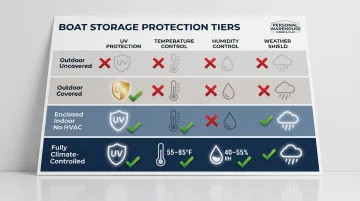
Understanding where a facility actually sits on this spectrum, rather than what label it uses, tells you far more than any marketing description will.
What Can Go Wrong Without Climate Control
Freeze-Thaw Damage in Cold Climates
Residual water in engine blocks, raw water cooling systems, and livewells expands when it freezes. According to Mercury Marine, winterization should be completed before the first hard freeze and when temperatures consistently drop below 50°F. Even a well-winterized boat faces additional risk from prolonged sustained cold — the kind common in Montana, Wisconsin, Michigan, and Colorado.
Heat and UV Damage in Hot Climates
Prolonged exposure to high temperatures and direct sunlight causes:
- Gelcoat to oxidize, chalk, and fade — an expensive cosmetic problem that degrades resale value
- Vinyl upholstery to crack, stiffen, and delaminate
- Plastic components to become brittle and eventually fail
This is the primary risk profile for boats stored outdoors or in non-climate-controlled facilities across Texas, Florida, Georgia, and South Carolina.
Humidity and Mold — The Most Underrated Threat
High moisture causes more cumulative damage than most boat owners expect. At relative humidity above 60%, mold and mildew establish quickly in enclosed cabins, bilge compartments, and on any fabric or wood surface. Marine dehumidifier guidance targets approximately 50% RH for boat interiors — and this level of control simply cannot be achieved in a storage unit without active humidity management.
Electronics and Corrosion
Damp storage environments corrode battery terminals, wiring connections, and marine electronics — often invisibly, until launch day. Salt-air regions worsen this risk considerably. Catching corrosion after the fact means costly replacements before you can get on the water.
The Compounding Effect of Long Storage
A boat stored 5–6 months through a harsh winter or hot, humid summer doesn't experience damage all at once. It accumulates progressively. Minor condensation over weeks becomes structural mold. Light oxidation over months becomes full gelcoat chalking. A six-month storage window gives every one of these risks time to compound — which is exactly why the storage environment matters as much as the boat's pre-storage condition.
When Do You Actually Need Climate Control?
Cold Climates (Sustained Below 20°F)
In Montana, Wisconsin, and Michigan, boats with inboard or sterndrive engines, fiberglass hulls, or significant onboard electronics need climate-controlled — or at minimum, enclosed insulated — indoor storage. NOAA's U.S. Climate Normals confirm these regions sustain winter lows at or below freezing for months at a stretch, well beyond what winterization alone can reliably offset.
Key risks in sustained cold without climate control:
- Engine block cracking from incomplete fluid purge
- Fiberglass stress fractures from repeated freeze-thaw cycling
- Electrical system failures from condensation buildup
Hot and Humid Climates (Florida, Texas, Georgia, South Carolina)
Here, humidity control is the priority. Boats in non-climate-controlled facilities across these states face sustained heat and humidity that damages upholstery, wood interiors, and electronics over a full summer. Prioritize dehumidified indoor storage at minimum — ideally with active temperature control if the boat will sit for four or more months.
By Boat Material
- Wood boats: Highest need for climate control. Moisture cycling causes swelling, warping, and rot — indoor storage with stable temperature and humidity is essential
- Fiberglass boats: More resilient, but gelcoat oxidizes under UV, and electronics and upholstery still need protection; benefit significantly from controlled environments
- Aluminum boats: Most durable in variable conditions, though still vulnerable to corrosion in high-humidity or saline environments; can often manage with quality indoor storage
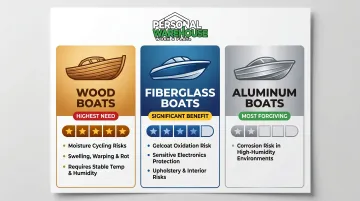
Any boat — regardless of hull material — that has significant electronics, luxury upholstery, a wood interior, or a sterndrive engine has elevated storage requirements.
Storage Duration as a Deciding Factor
- Under 3 months, mild climate: Quality enclosed indoor storage without full climate control is often sufficient
- 4+ months spanning a full winter or summer: Climate control pays back in avoided repairs and maintained resale value — often several times the cost of the upgrade
The Cost-vs-Value Reality Check
Once you've weighed climate, material, and duration, the math usually settles the question. Climate-controlled storage typically runs 25–50% more per month than standard indoor — often $25–$50 extra depending on boat size and region. Compare that to common repair costs:
- Gelcoat restoration: several hundred to several thousand dollars depending on damage extent
- Engine block damage from freeze: potentially $2,000–$8,000+
- Cabin mold remediation and upholstery replacement: $1,500–$5,000+, often exceeding a full season's storage cost
For a boat worth $40,000 or more, paying an extra $300–$600 per season for climate control is straightforward risk management.
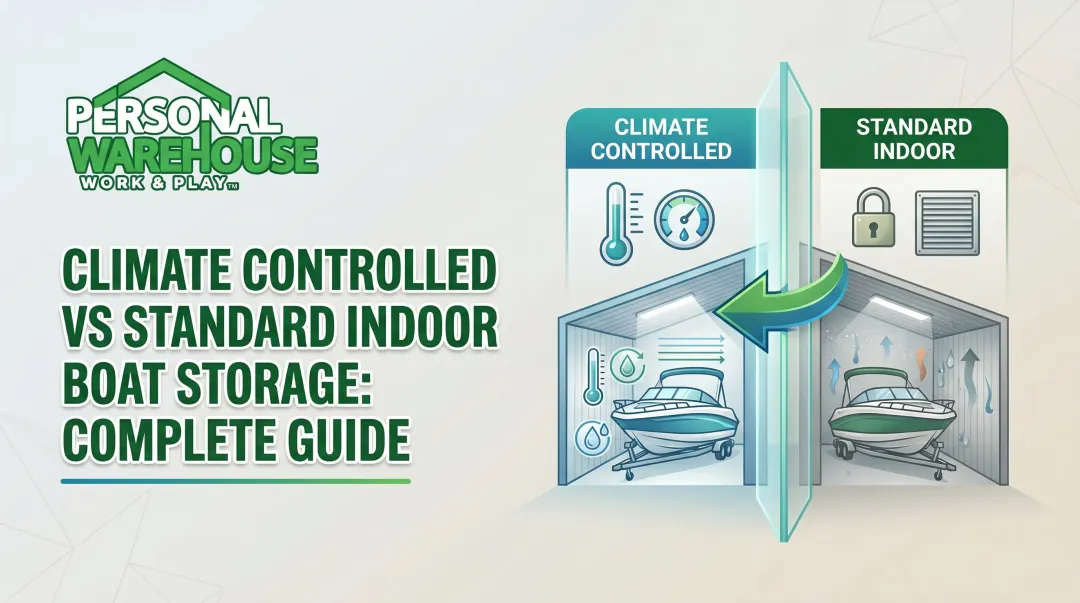
Climate Control vs. Insulated Indoor Storage: The Practical Difference
Temperature-controlled storage regulates temperature only — heating in winter, cooling in summer. It does not manage humidity. In many U.S. regions, relative humidity inside the unit still rises above 60% during humid seasons, creating mold and corrosion risk even while temperatures stay comfortable.
Insulated indoor storage (no active HVAC) provides passive thermal buffering. High-quality insulation — metal buildings with insulated panels can achieve R-19 to R-30 performance — slows the rate of temperature change, keeping interiors warmer than outside in winter and cooler in summer. But during extended cold or heat spells, temperatures will still drift toward outdoor conditions. And insulation does nothing for humidity.
True climate-controlled storage manages both, actively maintaining temperature and humidity within set ranges.
Where Insulated Indoor Storage Makes Sense
For many boat owners in moderate climates, a high-quality insulated indoor unit represents the practical sweet spot — meaningful protection without the full cost of active HVAC. The key variables to ask about:
- Insulation R-value (higher is better for thermal buffering)
- Overhead door insulation quality
- Passive ventilation or dehumidifier access (permitted or provided)
Personal Warehouse units — available across locations including Montana, Colorado, Wisconsin, Michigan, Florida, and Texas — are built with high-efficiency insulation and insulated overhead doors, with standard heating and optional A/C. For boat owners weighing enclosed storage with the option to add active climate control, contact the team at 303-222-0768 or info@personalwarehouse.com to discuss unit configurations at locations near you.
How to Choose the Right Storage for Your Boat
Run through these four questions:
- What's my local climate's worst-case seasonal extreme? Below 20°F sustained cold, or high-humidity summer heat, both warrant stronger storage solutions
- What is my boat made of, and does it have sensitive electronics or interior? Wood and boats with complex electronics have the highest storage requirements
- How long will it be stored? Under three months in a mild climate is a different calculation than six months through a Montana winter
- What would common damage cost to repair, relative to my boat's value? If repairs could run 10–20% of your boat's value, climate-controlled storage costs far less than a single damage claim
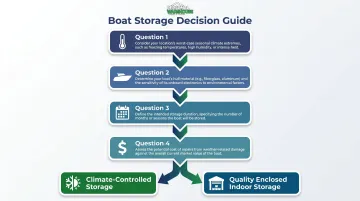
If most answers point toward high risk, climate-controlled storage is the right call. For a moderate climate, a short off-season, and an aluminum or basic fiberglass boat, quality enclosed indoor storage is usually enough — you don't need to pay for temperature control you won't use.
Frequently Asked Questions
What is the difference between climate-controlled storage and temperature-controlled storage?
Temperature-controlled storage regulates temperature only — heating or cooling — without actively managing humidity. Climate-controlled storage addresses both, maintaining humidity targets (typically 40–55% RH) alongside temperature. For boats, humidity control is often just as critical as temperature, since moisture drives mold, corrosion, and upholstery damage.
Does a fiberglass boat need climate-controlled storage?
Fiberglass is more resilient than wood but still benefits from indoor or climate-controlled storage. Gelcoat oxidizes under prolonged UV exposure, and electronics and upholstery remain vulnerable to moisture damage over long storage periods. In harsh climates or for 4+ month storage windows, climate-controlled or insulated indoor storage is worth the added cost.
Is outdoor covered storage sufficient for boats in winter?
In mild climates, covered outdoor storage offers basic precipitation and UV protection and may be acceptable for short storage periods. In climates with sustained freezing temperatures or high humidity, it's generally insufficient — the boat remains exposed to temperature extremes and ambient moisture without additional winterization measures.
How much does climate-controlled boat storage typically cost per month?
Climate-controlled storage typically runs 25–40% more than standard indoor storage. Depending on boat size and region, that often translates to $50–$200+ per month above basic indoor options.
Should I still winterize my boat even if it's in climate-controlled storage?
Yes. Even the best-maintained facility cannot guarantee perfectly stable temperatures year-round. BoatUS and Mercury Marine both recommend winterizing before the first hard freeze regardless of storage type — draining water systems, adding fuel stabilizer, and maintaining the battery provides an independent layer of protection.
What humidity level is ideal for storing a boat?
Most marine experts recommend 40–60% relative humidity. Above 60%, mold, mildew, and corrosion become active risks. Below 30%, wood and vinyl can dry out and crack. Aim for the EPA's recommended indoor range of 30–50% RH as a reliable baseline for long-term storage.