What happens during that time matters more than most owners realize. Uncontrolled storage conditions cause rubber seals to crack, batteries to drain and degrade, mold to spread through upholstery and cabinetry, and moisture to rot subflooring from the inside out. By the time these problems become visible, the repair bills are already substantial.
This guide covers why climate-controlled storage is the most cost-effective approach to RV preservation, what it protects against, how to identify storage-related damage early, how to prepare your RV properly, and the monitoring schedule to follow once it's in.
TL;DR
- Climate-controlled storage blocks the four main causes of off-season RV damage: temperature swings, humidity, UV radiation, and pests.
- Paying $1,200–$3,000 more per year for climate control beats a single roof repair ($500–$15,000) or rodent wiring fix ($500–$7,000+).
- Before storage, complete a full preparation checklist — fluids, tanks, battery, seals, and interior cleaning.
- Even in climate-controlled storage, monthly visual inspections catch problems before they escalate.
- An individually enclosed, insulated warehouse unit offers the strongest environmental protection for long-term RV storage.
Why Proper Storage Is Critical for Your RV's Lifespan
RVs are multi-system structures — plumbing, electrical, mechanical, and living quarters all in one. Each system degrades at a different rate under uncontrolled conditions, and the costs add up faster than most owners expect.
The Financial Case
The numbers make a clear argument for proactive storage:
| Storage Type | Monthly Cost | Annual Cost |
|---|---|---|
| Outdoor | $50–$100 | $600–$1,200 |
| Covered | $100–$150 | $1,200–$1,800 |
| Standard Indoor | $150–$250 | $1,800–$3,000 |
| Climate-Controlled | $200–$350+ | $2,400–$4,200+ |
Source: RecNation Storage
Compare that premium against what poor storage costs in repairs:
- Roof repair or replacement: $500–$15,000, depending on size and extent of damage
- Rodent wiring damage: $500–$7,000+ — and standard RV insurance rarely covers it
- Battery replacement: $150–$2,000+ per unit depending on type
- Water damage and delamination: $300–$5,000+ for structural repairs
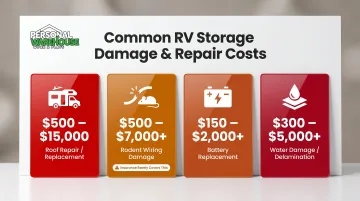
One roof repair or rodent infestation can wipe out years of savings from cheaper storage options.
Depreciation and Resale Value
RVs lose 15–20% of their value in the first year, and up to 71% by year ten. Cosmetic and mechanical condition are primary resale factors — faded paint, cracked seals, and musty interiors reduce buyer confidence and asking price directly. RVs stored in climate-controlled environments consistently show less visible deterioration, which supports stronger resale pricing.
What Uncontrolled Storage Does to Each System
- Batteries: Lead-acid batteries lose approximately 20% capacity at freezing temperatures and up to 50% at -22°F — accelerating replacement cycles
- Rubber seals and gaskets: Contract and crack in cold, then fail to reseal when temperatures rise, creating leak pathways
- Roof membranes: Freeze-thaw cycles expand existing cracks in sealant and caulking, pushing water into seams and screw holes
- Exterior surfaces: UV radiation breaks down chemical bonds in paint, gel coat, and plastics — causing oxidation, brittleness, and irreversible fading
- Interior materials: Heat causes adhesives, upholstery, and dashboard components to warp and delaminate faster
What Climate-Controlled Storage Protects Your RV From
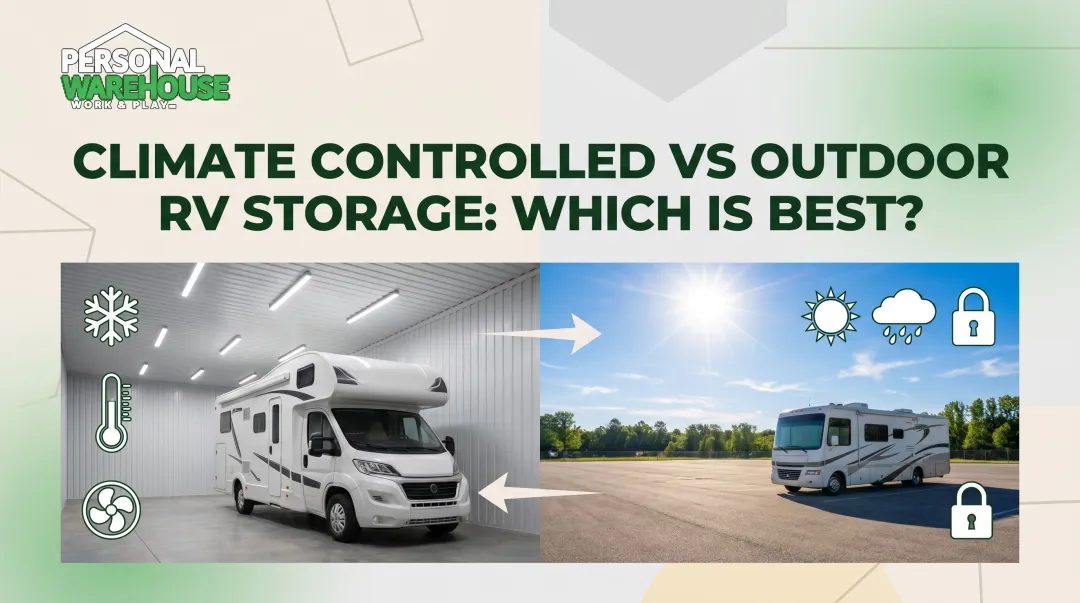
Climate-controlled storage means more than just being indoors. It means maintaining consistent temperature and humidity in an individually enclosed space — which eliminates the four main categories of off-season RV damage.
Temperature Extremes
Water lines, holding tanks, P-traps, and seals are all at risk of freezing and cracking below 32°F. Even with winterization, extreme cold accelerates battery discharge and degrades rubber components. On the other end, heat warps interior materials, softens adhesives, and breaks down upholstery faster.
Climate-controlled storage maintains a stable temperature range — typically 55–80°F — that avoids both extremes year-round.
Humidity and Moisture Damage
The EPA recommends keeping indoor relative humidity below 60%, ideally between 30–50%, because water-damaged materials must be dried within 24–48 hours to prevent mold growth. Inside an RV, trapped moisture from a single humid storage season can generate mold on mattresses, cabinetry, and upholstery. It can also corrode metal connections and battery terminals.
Outdoor covers and tarps cannot prevent moisture infiltration in humid climates. Only an enclosed, humidity-controlled environment can.
UV Radiation and Physical Exposure
Indoor storage eliminates UV exposure entirely — along with wind-driven debris, hail, and storm damage. Left outdoors, UV radiation breaks down chemical bonds in paint, gel coat, rubber seals, and plastics, producing oxidation, brittleness, and cracking that compromises both appearance and weatherproofing. Even partial shade only slows the process.
Pest Infiltration
Rodents, insects, and birds exploit any gap in an unsealed RV exterior. They nest in engine compartments, chew through wiring harnesses, and contaminate interiors with waste and nesting material. The University of Nebraska Extension notes that mice can destroy wall insulation in as little as three years of infestation.
Individually enclosed warehouse units, such as those Personal Warehouse offers in Bozeman and other locations, provide a sealed, managed environment that significantly reduces pest intrusion risk compared to open or covered outdoor lots.
Signs Your RV Has Been Damaged by Poor Storage
Storage damage is often invisible at first. Knowing what to look for — before and after each storage period — helps catch problems early and tells you whether your current storage solution is actually protecting your RV.
Exterior and Structural Warning Signs
Press gently on exterior wall panels, particularly around windows, vents, and slide-out seams. Soft or spongy spots indicate moisture trapped in the wall structure — the first stage of delamination. Other exterior indicators include:
- Bubbling, blistering, or rippling on fiberglass or gel coat panels
- Lifted, cracked, or missing roof caulking and sealant
- Faded, chalky, or oxidized paint finish
- Visible gaps where caulk has pulled away from seams
Interior and Mechanical Warning Signs
- Musty odors that don't dissipate with airing (early-stage mold)
- Stained ceiling or wall panels from moisture infiltration
- Sticky or warped cabinetry from adhesive failure caused by heat or humidity
- Battery that won't hold charge, accelerated by temperature extremes during storage
- Difficulty starting the engine or brake drag after a cold storage period
- Cracked belts or hoses visible during post-storage inspection
Mold, Moisture, and Pest Activity
- Discoloration on upholstery or walls with a persistent musty odor = active mold
- Droppings, gnawed foam insulation, or nesting material in the engine bay = rodent intrusion
- Rust staining on metal fixtures or watermarks on flooring = moisture infiltration
When Recurring Damage Means It's Time to Upgrade Storage
If you're finding similar problems after each storage season, the pattern tells you what the storage environment is failing at:
- Mold and moisture damage = humidity is not being controlled
- UV fading and seal cracking = the RV is exposed to outdoor sunlight
- Pest damage = the facility is not sufficiently sealed
Each season of inadequate storage stacks repair costs and chips away at resale value. If the same problems keep appearing, the storage environment is the issue — not bad luck.
How to Prepare Your RV for Climate-Controlled Storage
Even the best storage facility can't compensate for an RV stored in poor condition. Proper preparation ensures the controlled environment does its job throughout the off-season.
Water Systems and Fluids
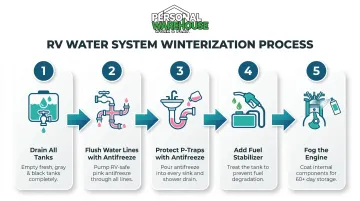
- Drain all tanks — fresh, gray, and black water, plus the water heater
- Flush water lines using non-toxic pink RV antifreeze through every faucet, toilet, and outdoor shower — or blow lines clear with compressed air at 40–50 PSI maximum
- Protect P-traps by pouring antifreeze into every drain and toilet bowl
- Add fuel stabilizer to the gas tank before the final drive to storage
- Fog the engine if storing for more than 60 days
Battery, Seals, and Tires
- Battery: Disconnect or connect to a trickle charger. For storage longer than 90 days, remove the battery and store it in a warm location
- Seals: Inspect all roof, window, and door seals — reseal any gaps with RV-approved product before storage, not after
- Tires: Check pressure to manufacturer specs, inspect for dry rot, and apply UV-protective dressing
Interior Preparation
- Remove all food — even sealed items can attract rodents
- Flip mattresses and prop cushions up to prevent condensation buildup
- Deep clean all surfaces, paying particular attention to the kitchen and bathroom
- Cover interior vents to block pest entry from inside the unit
Documentation
Photograph the RV's interior and exterior before storage. This takes 10 minutes and pays off immediately if you discover new damage at retrieval — you'll know exactly what changed, when, and can address the cause rather than guessing.
All of this preparation works best when the storage environment holds up its end. Personal Warehouse units are individually enclosed and insulated, with standard heating and optional air conditioning — so the stable conditions you need are built in, not an afterthought.
RV Storage Monitoring and Maintenance Schedule
A structured check-in schedule is essential for long-term storage — the longer the period, the more valuable active oversight becomes.
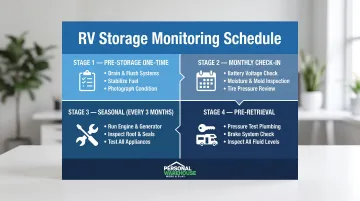
| Stage | Key Tasks |
|---|---|
| Pre-Storage (One-Time) | Drain/flush water systems; stabilize fuel; clean and dry interior; lubricate seals; apply tire treatment; photograph condition |
| Monthly Check-In | Inspect battery charge; check for moisture or pest signs; verify tires and vent covers |
| Seasonal (Every 3 Months) | Run engine briefly; inspect roof and seals; test appliances; run generator 2 hours at 50% load |
| Pre-Retrieval | Water pressure test; appliance check; brake inspection; tire inflation; fluid levels; exterior seal review |
Check-in frequency depends on how long your RV sits:
- 1–3 months stored: Monthly check-ins are optional but worth doing if you can manage it
- 6+ months stored: Monthly inspections are non-negotiable — climate control reduces risk, but doesn't replace active oversight
Conclusion
For RV owners who take preservation seriously, climate-controlled storage pays for itself. The annual premium over outdoor storage is consistently less than the cost of a single moisture, UV, or pest damage event.
The right storage environment — paired with thorough preparation and a consistent monitoring schedule — protects every system in your RV: mechanical, structural, and interior. Lower repair bills, stronger resale value, and a rig that's genuinely road-ready at the start of every season follow naturally from that foundation.
Personal Warehouse offers climate-controlled RV storage spaces designed specifically for owners who want that level of protection without compromise.
Frequently Asked Questions
Is climate-controlled indoor RV storage worth it compared to outdoor storage?
For most RV owners, yes. The cost premium (roughly $1,200–$3,000 annually) is typically offset by avoiding a single moisture, UV, or pest repair event, any of which can easily exceed that amount. High-value RVs and those stored for six or more months per year see the greatest return on the investment.
What temperature should climate-controlled RV storage be kept at?
Most climate-controlled facilities maintain temperatures between 55–80°F, which aligns with EPA guidance on mold prevention and protects batteries, seals, and interior materials. Consistent temperature matters as much as the specific number — it's the freeze-thaw cycling that causes the most structural damage.
How do I prepare my RV before putting it in climate-controlled storage?
Complete these steps before closing up:
- Drain and flush all water systems
- Add fuel stabilizer and maintain or disconnect the battery
- Clean and fully dry the interior
- Lubricate all door and compartment seals
- Remove all food and document condition with photos
Does climate-controlled storage prevent mold in an RV?
It significantly reduces the risk by controlling humidity below the 60% threshold where mold growth accelerates. However, if moisture is already present inside the RV when it goes into storage, mold can still develop. The RV must be fully dried before storage begins.
How often should I check on my RV while it's in long-term storage?
Monthly visual inspections are recommended for storage periods of six months or longer — checking battery charge, tires, moisture signs, and vent covers. Every three months, do a more thorough check including seal inspection and appliance testing.
Can I keep belongings inside my RV during climate-controlled storage?
Most items (linens, clothing, sealed non-perishables) can stay inside a climate-controlled unit without issue. Remove all food, batteries from electronics, and flammable liquids — and confirm your facility's specific policies before move-in.