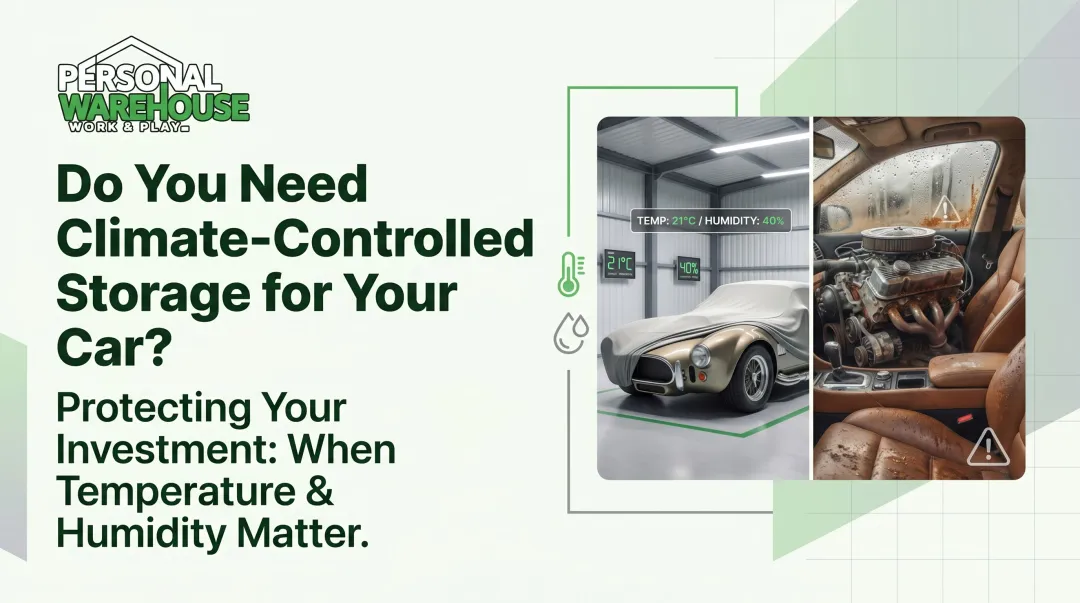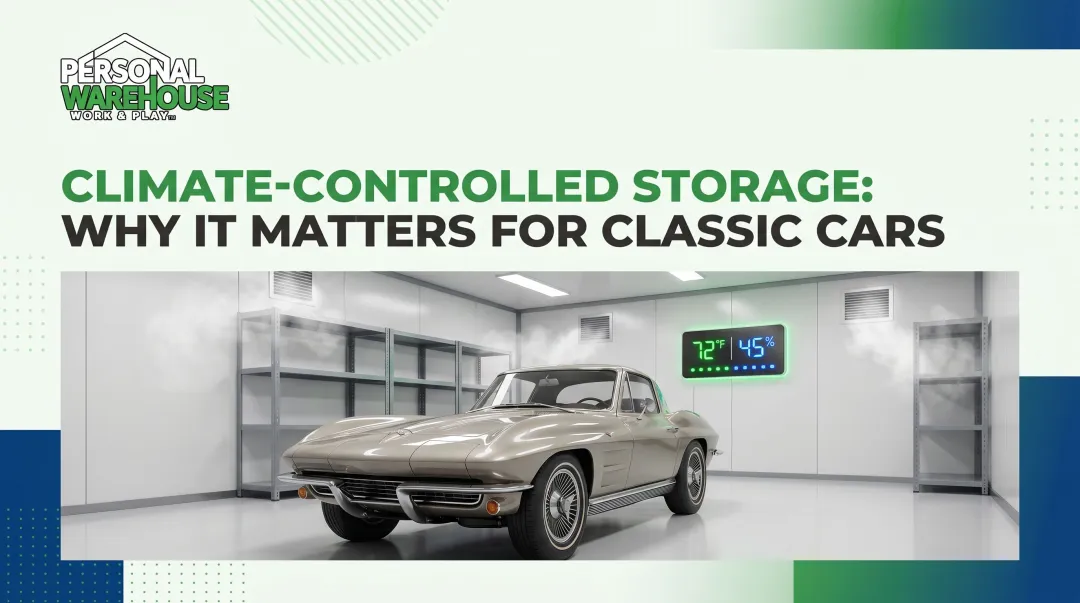
For collectors, seasonal drivers, and RV owners in regions like Montana — where winter temperatures routinely drop well below freezing and summer humidity swings can be dramatic — proper storage isn't optional. It's the difference between pulling out a car in spring and pulling out a repair bill.
This guide gives you a practical checklist of the features that actually matter when evaluating a climate-controlled storage facility, so you can make a confident, informed decision.
TL;DR
- Temperature and humidity targets: 50–80°F with humidity around 45–55% prevents corrosion, mold, and material degradation
- Security baseline: Gated access, 24/7 video surveillance, individual unit alarms, and controlled entry form the minimum acceptable standard
- Building envelope matters: Wall, roof, and overhead door insulation ratings determine whether the facility can actually hit its climate targets
- Size and access: Unit dimensions and access hours directly affect day-to-day usability — not just climate specs
- Value-add services: Battery tenders, tire checks, and on-site staff prevent costly surprises during long-term storage
Why Climate-Controlled Storage Matters More Than You Think
Not all storage is created equal. Here's a quick breakdown of the four main options:
| Storage Type | Description | Monthly Cost | Best For |
|---|---|---|---|
| Outdoor (open-air) | Uncovered lot parking | $75–$150 | Short-term, budget storage |
| Covered/canopy | Roof overhead, open sides | $150–$300 | Basic weather shielding |
| Shared indoor | Enclosed building, no individual units | Varies | Element protection only |
| Personal enclosed, climate-controlled | Individual unit with HVAC + humidity control | $250–$500+ | Long-term or high-value storage |
Only the personal enclosed option gives you control over the two variables that cause the most damage: temperature and humidity.
What Uncontrolled Environments Actually Do
The damage list is longer than most people expect:
- Rust and corrosion on frame, body, and engine components — triggered once RH exceeds 50%
- Mold and mildew on upholstery and carpeting — nearly certain above 70% RH without active dehumidification
- Rubber seal and tire cracking from cold or heat cycling
- Battery freeze damage — a low-charge battery can freeze solid below 32°F, causing permanent cell failure
- Brake rotor fusion if the parking brake is engaged during long-term storage
- Paint oxidation and dashboard cracking from UV exposure and temperature extremes
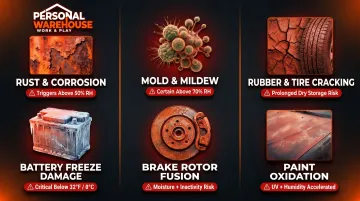
In cold climates like Montana's Climate Zones 6–7, temperature cycling creates condensation on interior vehicle surfaces even when the car is sitting indoors, accelerating oxidation regardless of whether the space appears dry. According to Extra Space Storage, climate-controlled storage is especially important when temperatures drop below 32°F or rise above 90°F, particularly for long-term storage.
Most collector car insurance underwriters, including American Collectors Insurance, require vehicles to be stored in a fully enclosed, locked structure. Open carports and street parking don't qualify for coverage. Climate-controlled enclosed storage satisfies that requirement; basic covered canopy storage often does not.
Temperature and Humidity Control
The Numbers That Matter
Multiple authoritative sources — including Munters and Hagerty — converge on a consistent target range for stored vehicles:
- Temperature: 50–70°F year-round
- Relative humidity: 45–55%
Steel corrosion begins once humidity exceeds 50%. Mold becomes a serious risk above 70%. A facility that only mentions temperature control without specifying humidity management is not truly climate-controlled.
Dehumidification vs. HVAC: Why the Difference Matters
This is where many facilities fall short. Heating air reduces relative humidity somewhat, but it doesn't eliminate moisture — it just redistributes it. Cotes confirms that "controlling moisture build-up through dehumidification, rather than by simply controlling temperature, is widely accepted as the most effective option" for protecting stored vehicles.
Dedicated desiccant or refrigerant dehumidifiers pull moisture directly from the air, independent of temperature. Ask any prospective facility directly: Do you have standalone dehumidification, or does your HVAC system handle humidity control? A facility relying solely on HVAC is managing comfort — not protecting your vehicle.
What Else to Ask Before Signing
- Ventilation: Stagnant air encourages mold and odors. The facility should have active air circulation, not just temperature regulation.
- Backup power: Ask whether the facility has a generator or battery backup to maintain climate conditions during power outages, and how frequently that system is tested.
- Automated controls: Manual thermostats are not sufficient. Look for automated climate management that maintains consistent conditions around the clock — temperature cycling, even indoors, creates condensation that accelerates corrosion.
Security Features That Protect High-Value Vehicles
The Baseline Stack
Any reputable climate-controlled facility should include:
- Perimeter fencing with a gated entry point
- Personalized keypad or key-fob access — unique codes per owner, not a shared entry pin
- 24/7 video surveillance covering all entry points and interior aisles
- Motion-activated exterior lighting to deter opportunistic threats
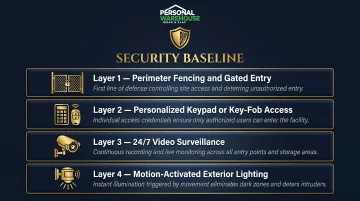
These are table stakes, not premium features. If a facility is missing any of them, keep looking.
Individual Unit Alarms
Facility-wide cameras are useful, but they don't alert anyone the moment your unit is accessed without authorization. Individual unit alarms are sensors that trigger when a specific unit is opened or breached. They add a targeted layer of protection that general surveillance cannot replicate — and for high-value vehicles, that distinction is worth asking about directly.
Monitoring and Lighting
A facility with live monitoring or a third-party alarm response service can act on an alert in real time. Post-incident footage review is useful for insurance claims; real-time response actually stops theft.
Lighting is the other half of the equation. Well-lit interior aisles and exterior approaches serve two purposes: deterrence and practicality. If you're retrieving a vehicle early morning or after dark, you want clear, bright access — not a dimly lit corridor. Personal Warehouse uses all-LED lighting throughout interiors and exterior approaches, covering both security and day-to-day convenience.
Building Quality, Insulation, and Overhead Doors
The HVAC system is only as effective as the building it's operating inside. A thin-walled metal structure with minimal insulation will bleed conditioned air constantly, regardless of how powerful the equipment is.
Insulation R-Values by Region
The U.S. Department of Energy and ENERGY STAR publish insulation recommendations by climate zone. Target these minimums when evaluating vehicle storage facilities:
| Region | Climate Zone | Recommended Ceiling R-Value | Floor R-Value |
|---|---|---|---|
| Montana (most of state) | Zones 6–7 | R-60 | R-30 to R-38 |
| Southeast US (GA, SC, NC) | Zones 2–3 | R-49 | R-13 to R-19 |
Ask facilities about their wall and ceiling R-values. If they can't answer, that's itself an answer.
Overhead Doors: The Weakest Link
Even in a well-insulated building, the overhead door is the biggest point of thermal loss. Commercial insulated doors range from roughly R-9 on the low end to R-27 for top-tier options like Clopay's Intellicore series. Every time the door opens in winter, conditioned air escapes — so weather seal quality is just as important as the door's insulation rating.
Personal Warehouse units include insulated overhead doors rated at the higher end of the commercial range as a standard specification — a detail that directly affects a facility's ability to maintain consistent interior conditions.
Structural Details Worth Inspecting
Before committing to a facility, walk the space and look for:
- Gaps around door frames or wall panels
- Condensation on interior walls (a sign of thermal bridging)
- Standing water near the foundation (vapor intrusion through unsealed concrete)
- Visible rust on the building structure itself
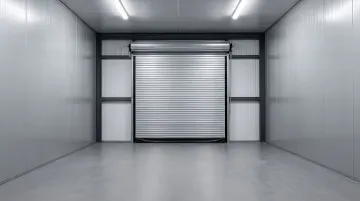
A vapor barrier under or on top of the concrete slab is critical — moisture migrates upward through unprotected concrete, elevating interior humidity regardless of what the dehumidifier is doing. Industry guidance consistently points to either a heavy-duty membrane or an epoxy-adhered barrier over slabs in enclosed storage environments as the reliable standard.
Space, Accessibility, and Additional Services
Getting the Unit Size Right
RecNation recommends at least 2 feet of clearance around the entire vehicle for inspections, door opening, and damage prevention. Use this as your baseline:
| Vehicle Type | Recommended Unit Size |
|---|---|
| Compact sedans | 10×15 ft |
| Most sedans, mid-size SUVs | 10×20 ft |
| Trucks, large SUVs, commercial vans | 10×25 to 10×30 ft |
| RVs and boats | 10×40 ft or larger |
If you need to work on the vehicle or store additional gear alongside it, go larger. Personal Warehouse offers mezzanine additions that expand usable space by up to 30% — useful for collectors who want to keep tools, detailing supplies, or spare parts in the same unit without sacrificing floor space for the vehicle itself.
Access Hours and Retrieval
Confirm whether the facility offers 24/7 keypad access or operates on set business hours. For spontaneous use — taking the car out for a Sunday drive or preparing for an event — business-hours-only access is a genuine inconvenience. Self-service retrieval is also far more practical than requiring staff assistance.
Value-Add Services Worth Asking About
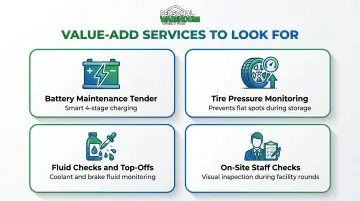
Beyond temperature control, the best facilities offer services that protect the vehicle between your visits:
- Battery maintenance tenders — a smart tender like the Battery Tender Plus (1.25-amp, four-stage charging) maintains battery voltage without the overcharge risk of a basic trickle charger
- Tire pressure monitoring — flat spots develop faster than most owners expect during extended storage
- Fluid checks and top-offs — coolant and brake fluid levels drop over time, and low fluid creates condensation inside components
- On-site staff who can flag visible issues during routine facility checks
Storage structure matters as much as services. Personal Warehouse units are sold as ownership units on a 99-year ground lease — not rented month-to-month. That means no exposure to price increases, policy changes, or facility closures. For collectors storing multi-generational vehicles, that stability is hard to put a price on.
Frequently Asked Questions
What are the best conditions for car storage?
The optimal environment is 50–70°F with relative humidity around 45–55%, in an enclosed, ventilated space away from direct sunlight and moisture. These conditions prevent the most common forms of deterioration, including rust, mold, rubber degradation, and paint oxidation.
What is the 30-60-90 rule for cars?
The 30-60-90 rule is a mileage-based maintenance guideline, not a storage interval schedule. It refers to manufacturer-recommended inspections or parts replacement at 30,000, 60,000, and 90,000 miles on the odometer.
What items should be in a climate-controlled storage unit?
Keep a battery tender, tire pressure gauge, car cover, tire cradles or jack stands, a small toolbox, and fuel stabilizer. These basics let you conduct routine checks and address minor issues without a full service visit.
How much does climate-controlled car storage cost per month?
Costs vary by location, unit size, and facility quality. Outdoor storage typically runs $75–$150/month; climate-controlled personal units range from $250–$500+.
Is climate-controlled storage worth it for everyday cars?
For storage under 60 days in a moderate climate, covered indoor storage is usually sufficient. Beyond 60 days, in extreme climates, or for any vehicle with real market value, climate-controlled storage is worth the cost. One rust repair or mold remediation typically exceeds several years of storage fees.
How do I prepare my car before putting it in climate-controlled storage?
Fill the tank and add fuel stabilizer, change the oil and filter, inflate tires to spec (or use tire cradles), clean the interior and exterior thoroughly, connect a battery tender, and — critically — disengage the parking brake to prevent the pads from bonding to the rotors during extended storage.