This pause is common, and it's worth taking seriously. A ground lease isn't a red flag by default, but it does work differently from standard property ownership. Understanding exactly what you're buying — and what you're not — can mean the difference between a smart long-term investment and an expensive surprise.
This post covers what a ground lease actually is, how ground rent fits into shared ownership structures, what rights you hold as a leaseholder, and what warning signs to watch for before you sign.
TL;DR
- A ground lease means you own the building or unit but not the land beneath it — you pay ground rent to the landowner for land use rights
- Ground leases run 50 to 99 years; longer terms provide better financing options and stronger resale value
- In shared ownership, ground rent and rent on un-owned portions of the property are legally separate charges — not the same cost
- Doubling rent clauses, short remaining terms, and vague extension rights are the risks that trip up buyers most often
- Buyer-friendly leases cap rent increases, define extension options clearly, and support conventional financing
What Is a Ground Lease in Shared Ownership?
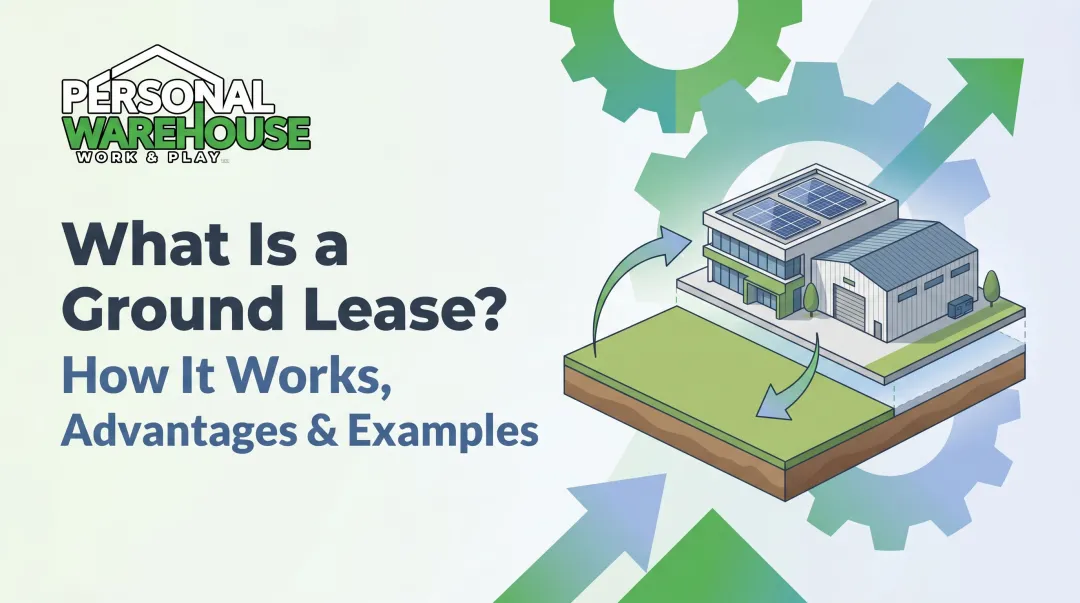
NAIOP defines a ground lease as a contract where "the landowner (lessor) agrees to lease a parcel of land for a set period of time to a third party (lessee)." In practical terms, you own the building, unit, or improvements — the landowner retains title to the land itself.
That distinction matters. A tenant renting an apartment holds no ownership interest whatsoever. A ground leaseholder does — they own a real, documented, transferable interest in the property sitting on that land.
How Ground Leases Work in Shared Ownership
In shared ownership models — where buyers purchase a stake in a structure rather than full land-and-building title — ground leases are the legal mechanism that makes ownership possible without requiring land purchase. You hold a genuine ownership interest in the unit or improvement; the ground lease defines how long that interest lasts and under what conditions.
This differs from fee simple ownership, where you own both land and structure outright with no expiration date. Under a leasehold, you own the structure for a defined term. That term matters enormously for value, financing, and resale.
Lease Duration and Why It Matters
Holland & Knight confirms that ground lease terms typically range from 50 to 99 years, with 99-year terms being the widely recognized industry standard. Longer terms:
- Support conventional and SBA financing
- Maintain strong resale value throughout the ownership horizon
- Give buyers functional equivalence to long-term ownership
- Provide lenders sufficient security to approve mortgages
Your leasehold interest can be sold, inherited, or transferred during the lease term. It's a real asset with documented market value, fully distinct from any rental arrangement.
How Ground Rent Works in Shared Ownership
Ground rent is the periodic payment — typically annual or semi-annual — a leaseholder makes to the landowner for the right to use the underlying land. Unlike traditional rent, it covers only land use, not the building you occupy.
The Dual Payment Structure
In shared ownership arrangements, buyers may encounter two distinct charges:
- Ground rent — paid to the landowner for land use rights
- Occupancy rent — paid on any portion of the property the buyer doesn't yet fully own
These are legally separate obligations. Confusing them leads to misunderstanding the true cost of ownership. Always ask which charges apply and under what conditions each can change.
How Ground Rent Is Set and Adjusted
Ground rent amounts are defined in the lease at signing. Escalation structures vary widely:
| Escalation Type | Description | Buyer Impact |
|---|---|---|
| Fixed schedule | E.g., 10% increase every five years | Predictable, manageable |
| CPI/RPI linked | Tied to inflation indices | Predictable ceiling |
| Doubling clauses | Rent doubles at defined intervals | High risk — avoid |
| Peppercorn | Nominal amount (effectively zero) | Ideal for buyers |
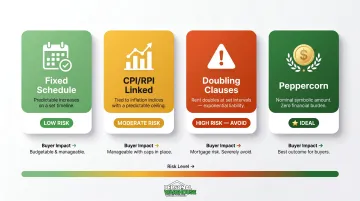
Recent regulatory trends reflect growing concern about uncapped escalators. Maryland caps backdated ground rent collection at three years under Maryland Real Property Code Section 8-809. Pennsylvania has gone further — Title 68 P.S. Section 161 prohibits the creation of new perpetual ground rents entirely.
Understanding how escalation is structured helps clarify what your options are down the road — including whether you can exit the ground rent relationship altogether.
Ground Rent Redemption
In some jurisdictions — Maryland being the clearest US example — leaseholders have a statutory right to purchase the underlying land outright, converting to fee simple ownership. This eliminates ground rent obligations permanently. Where this option exists, factor it into your long-term cost calculations before committing.
Your Rights and Responsibilities as a Ground Leaseholder
Core Rights You Should Expect
A well-structured ground lease protects these rights explicitly:
- Occupy and use the space for the full lease term
- Renovate and customize the interior, subject to local building codes
- Sell or transfer the leasehold interest to a buyer
- Mortgage the leasehold interest to finance the purchase
- Extend the lease or purchase the freehold (where contractually provided)
None of these rights are automatic — they must be written into the lease. If a lease is vague about any of these, that vagueness works in the landowner's favor.
Improvements: What You Own During the Lease, and What Happens After
During the lease term, any improvements you make — mezzanines, restrooms, HVAC systems, built-out interiors — are yours. You can customize freely within the parameters of your lease and local codes.
At lease expiration, however, the standard rule applies: as Otten Johnson confirms, "ownership of the developer's improvements most often reverts to the landowner." You don't get compensated for improvements; they become part of the land.
This is why lease term length isn't just an abstract number. If you invest significantly in customizing a space, you want a lease term long enough to amortize that investment — and ideally, extension rights or purchase options that let you retain the asset long-term.
Shared Area Costs
Beyond your individual unit, ownership in a multi-unit development comes with a share of ongoing costs for common areas — drive aisles, lighting, and exterior infrastructure. These are usually structured as Common Area Maintenance (CAM) charges, allocated among unit owners by square footage. Before signing, confirm whether the lease caps annual CAM increases, specifies which expenses qualify, and identifies who administers the fund — these details matter more than the initial estimate.
Common Risks to Understand Before You Sign
Escalating Ground Rent Clauses
Doubling clauses are the single biggest risk in poorly drafted ground leases. A rent that doubles every 10-15 years can go from manageable to unaffordable within a single generation — and lenders notice. US lenders follow the same logic: properties with rapidly escalating ground rent face mortgage refusals or reduced valuations, turning what should be a liquid asset into a cash-only sale.
What to look for: Fixed escalation tied to CPI or a defined percentage cap. Walk away from any doubling clause.
Financing Challenges
Mortgage availability on ground lease properties depends on how much time remains on the lease — but "80 years minimum" is not the actual standard. Real lender requirements vary by product:
| Lender/Product | Minimum Remaining Term |
|---|---|
| Fannie Mae (single-family) | 5 years beyond loan maturity |
| Fannie Mae / Freddie Mac (multifamily) | 10 years beyond amortization period |
| CMBS / institutional lenders | 30+ years total remaining term |
| SBA loans | Remaining term must equal loan term |
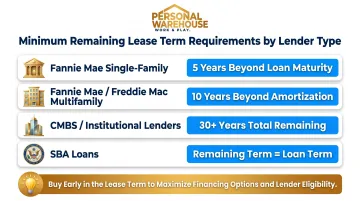
The practical takeaway: the earlier in the lease term you buy, the more financing options you have. A 99-year lease at purchase gives you maximum flexibility.
Reversion Risk
If you purchase a unit late in a lease's life without understanding the remaining term, you could find yourself unable to refinance, sell, or pass the property on to heirs. Always confirm:
- Exact remaining term at purchase
- Any extension options and their costs
- Whether extension rights are contractual or subject to negotiation at expiration
Taken together, these three risks — escalating rent, financing constraints, and reversion exposure — are exactly what a careful lease review should address before you commit. If any clause raises questions, have a real estate attorney walk through it with you.
What Makes a Ground Lease Work in Your Favor
A long, well-drafted ground lease removes land acquisition cost from the equation — which is precisely what makes shared ownership of commercial space financially viable for buyers who can't (or simply don't want to) purchase land outright.
Long Lease Terms as a Stability Signal
A 99-year ground lease gives buyers the functional equivalent of long-term ownership. Over that horizon, you can use, improve, finance, and sell your space much like a fee simple owner. The key difference is that land acquisition cost is removed from the equation — which is precisely what makes ownership accessible.
A 99-year ground lease gives buyers the functional equivalent of long-term ownership. Over that horizon, you can use, improve, finance, and sell your space much like a fee simple owner. Land cost stays off your balance sheet — keeping entry costs manageable without sacrificing the control that ownership provides.
Buyer-Friendly Lease Characteristics
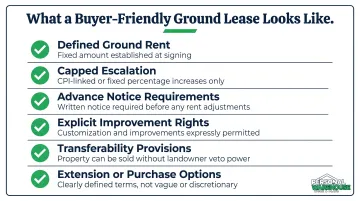
Before signing any ground lease, verify these elements are present:
- Defined ground rent with a fixed amount at signing
- Capped escalation — CPI-linked or fixed percentage, not uncapped or doubling
- Advance notice requirements before any rent adjustment
- Explicit improvement rights permitting customization
- Transferability provisions allowing sale without landowner veto
- Extension or purchase options with defined terms, not just vague "right to negotiate"
How Personal Warehouse Structures This
Personal Warehouse structures its warehouse units under a 99-year ground lease specifically designed to give buyers the stability and asset-building potential they need. Buyers can:
- Secure ownership with financing terms comparable to a residential loan, through preferred lenders experienced with SBA 504 and 7(a) programs
- Customize their space with mezzanines that expand usable area by up to 30%, along with restrooms, HVAC, and other improvements
- Hold a transferable ownership interest they can sell, lease to others, or hold for long-term appreciation
Each of those benefits depends on the lease term holding up over time. The 99-year structure is long enough to support conventional financing, allow full amortization of improvement costs, and preserve resale value well beyond any single owner's holding period. Personal Warehouse's Bozeman, MT project — currently under construction with 2026 delivery — is built on exactly this structure.
For specific ground rent terms, escalation provisions, and lease documentation, contact Personal Warehouse directly at 303-222-0768 or info@personalwarehouse.com.
Frequently Asked Questions
Is it worth buying ground rent?
Buying the ground rent (purchasing the landowner's right to collect rent) can generate steady passive income, but it suits a specific type of investor comfortable with long-horizon, low-yield returns. For most buyers in shared ownership arrangements, the priority is securing favorable lease terms — not acquiring the rent stream itself.
Do you pay ground rent if you have a share of freehold?
Shared freehold owners collectively own the land, so ground rent typically doesn't apply to them. This is different from shared ownership (part-buy, part-rent leasehold arrangements), where ground rent may still apply on the leasehold portion.
What are common ground rent escalation risks in the US?
Some ground leases include rent escalation clauses tied to CPI, fixed percentages, or periodic renegotiation — all of which can significantly increase carrying costs over time. Before signing, confirm whether rent increases are capped, how often they reset, and whether the escalation terms affect your financing eligibility.
What happens when a ground lease expires?
Ownership of the structure typically reverts to the landowner. Always check the remaining lease term, any extension rights, and reversion clauses before purchasing — these terms determine what your investment is worth at lease expiration.
Can you get a mortgage on a ground lease property?
Yes, mortgages are generally available on ground lease properties. Requirements vary by lender and product — from 5 years beyond loan maturity (Fannie Mae single-family) to 30+ years total remaining term (CMBS). Confirm financing eligibility early in the process, not after you're under contract.
What is the difference between a ground lease and a regular property lease?
A ground lease grants long-term use rights — often 50 to 99 years — over land beneath a structure the buyer actually owns. A regular property lease is a short-term rental arrangement with no ownership interest transferred to the tenant. That distinction matters for financing, taxation, and what you can do with the property over time.